

We've already explored 1980, 1981, and 1982. Now, it's time to dive into 1983—a year that brought innovation, excitement, and turmoil to gaming. I had just turned 2, and my sister was born in December '82. We are exactly 2 years apart and share the same birthday month.
Back then, we were still living in Hong Kong. I don't remember much about this time; I only remember what I saw in family photos. My earliest memories were starting to form, probably more so towards the end of that year nearing my third birthday. But honestly, it was all just a blur.
So what was popular and trending in 1983? The first compact discs (CDs) were officially released for sale in March across Europe, the U.S., and other countries, marking a new era in music consumption and setting the stage for the transition from vinyl to digital media.
Run-D.M.C. made their debut in 1983 with their first single, “It’s Like That/Sucker M.C.'s. Michael Jackson's "Thriller" album hit number one on the Billboard charts and stayed there for a record-breaking 37 weeks. On the big screen, Return of the Jedi dominated theatres, while Scarface and WarGames became iconic films of the decade. These movies and shifting musical trends reflected society's growing fascination with technology, conflict, and fame during this era.

The Gaming Scene Levels Up
The video game crash hit North America hard, with market oversaturation and piles of poorly made games like E.T. sinking consumer trust. While the industry crumbled in the U.S., it was mostly an American problem.
The MSX, ZX Spectrum and Commodore 64 thrived, avoiding the U.S. market crash. The Spectrum dominated the U.K., thanks to its affordability and vast game library. At the same time, the Commodore 64's superior graphics and sound made it a hit in Europe.
The MSX aimed at creating a unified platform for home computers. Developed by ASCII Corporation and Microsoft, it was designed to compete with the Commodore 64 and ZX Spectrum. It didn't take off everywhere but became a hit in Japan, South Korea, and Europe, fuelling a vibrant gaming scene.
These home computers helped shift gaming away from consoles, driving innovation in gaming and programming.
In Japan, the industry was still growing strong. Two major consoles hit the market, marking the start of the third generation of video games. The launch of Nintendo's Famicom (Family Computer) and Sega's SG-1000 on the same day, July 15 1983, was a moment of unparalleled excitement and anticipation. These systems would revolutionize gaming and shape the future of the industry.
This wasn't just a pivotal moment for gaming—Inspector Gadget, G.I. Joe: A Real American Hero, Dungeons & Dragons (TV series), and He-Man and the Master of the Universe all made their debuts on American TV during the same year. Over in Asia, the Captain Tsubasa anime kicked off and became legendary for its influence on sports anime. It had a huge impact on me—I still remember when my mum got me a soccer ball because of this anime, and I used to carry it around in a net every time I went to the park.

The Games
Even with the challenges in North America, 1983 came through with game-changing innovations, iconic games, movies, anime, cartoons, and unforgettable moments. Let's explore 10 of the most influential games from this iconic year, showing how gaming continued to evolve and thrive, even in tough times.

Mario Bros. (Nintendo)
Mario Bros. introduced Mario and Luigi, working together for the first time in a fast-paced, co-op platformer. Set in an underground sewer, players had to defeat enemies like Shellcreepers and Sidesteppers by flipping and kicking them off platforms. Its diagonal movement and co-op mechanics made it fun but challenging.
The game's innovative two-player mode stood out, encouraging both teamwork and competition. It performed well in arcades and saw ports on the Atari 2600 and N.E.S., cementing Mario's rise as an icon. Mario Bros. paved the way for Super Mario Bros. and future multiplayer games.
Fun fact: This is where Mario officially became a plumber, setting the stage for his adventures to come.
Dragon's Lair (Cinematronics)
Dragon's Lair was unlike anything seen before in arcades. It used laserdisc technology to create a fully animated adventure. Players guided Dirk the Daring through a series of quick-time events, attempting to rescue Princess Daphne from an evil dragon. Who didn't have a crush on Princess Daphne?
The stunning visuals, crafted by Don Bluth, set it apart from other games. Its beautiful, animated sequences gave it the feel of an interactive cartoon, but the game's trial-and-error mechanics made it notoriously difficult. Though gameplay was simple, the graphics wowed players, making Dragon's Lair an instant hit. It became one of the earliest arcade games to achieve mainstream success through its visuals rather than gameplay alone.
I remember seeing this arcade in Timezones, it was still around even in the early '90s.
Fun fact: Dragon's Lair was so cutting-edge that arcades charged 50 cents per play, double the usual rate then.
Track & Field (Konami)
Track & Field brought button-mashing madness to arcades. It challenged players to compete in events like the 100-meter dash, long jump, and javelin throw. The game required rapid button presses to build speed or power, making it both physically demanding and exciting.
It became an arcade sensation, inspiring Olympic-style games for years to come. The competitive edge it introduced, with players aiming for high scores or records, made it a favourite among friends and strangers.
Fun fact: Track & Field allowed multiple players to compete, either taking turns or playing side by side, adding to its lasting appeal.
Elevator Action (Taito)
Elevator Action mixed platforming with stealth and strategy. Players controlled a secret agent tasked with collecting documents while navigating a building full of elevators and enemy agents. Timing was vital—players had to avoid getting caught while using elevators to move between floors.
The game stood out with its spy-thriller theme and dynamic gameplay, offering something different from typical arcade titles of the time. It became a cult favourite and was later ported to several home consoles.
Fun fact: Elevator Action was one of the first games to blend puzzle-solving with action, paving the way for future stealth-based games.
Spy Hunter (Bally Midway)
Spy Hunter brought a thrilling mix of racing and combat, putting players behind the wheel of a weaponised car. Inspired by James Bond movies, players drove along highways, using machine guns, oil slicks, and smoke screens to outmanoeuvre enemies and complete missions.
The game stood out for its top-down perspective and fast-paced gameplay, creating a unique blend of racing and action that became an arcade classic. It also featured an unforgettable soundtrack inspired by the James Bond theme, adding to the spy-thriller vibe. Spy Hunter later saw ports on consoles like the Commodore 64 and N.E.S., further cementing its popularity.
Fun Fact: Originally, Bally Midway intended to use the official James Bond license, but when that fell through, they rebranded it as Spy Hunter, which still captured the spirit of a high-stakes spy adventure.
Ultima III: Exodus (Origin Systems)
Ultima III: Exodus was a significant leap forward for RPGs, serving as the final instalment of the 'Age of Darkness' trilogy. It was the first in the Ultima series to let you control a whole squad of four characters, each with different classes and races—a first in the Ultima series.
The game's plot revolves around defeating Exodus, a mysterious entity created by two previous villains, Mondain and Minax. Players embark on a quest across the land of Sosaria, solving puzzles, conversing with N.P.C.s, and exploring dangerous dungeons to gather magical cards necessary for confronting Exodus.
This game revolutionised RPGs by introducing party-based gameplay and tactical combat, influencing major franchises like Dragon Quest and Final Fantasy. It also introduced open-world exploration and deep storytelling, paving the way for legends like Baldur's Gate and The Elder Scrolls.
Fun Fact: Players who completed Ultima III could send proof of their victory to Origin Systems and receive a personalised certificate signed by the creator, Richard Garriott (aka Lord British). This tradition continued up until Ultima VIII (1994).
Star Wars: The Arcade Game (Atari Inc.)
Star Wars by Atari brought the magic of the original movie trilogy into arcades. This first-person rail shooter lets players step into the boots of Luke Skywalker, piloting an X-wing in the iconic Death Star trench run. With vector graphics and voice samples from the movie ("Use the Force, Luke!"), it captured the thrill of the film in a way few games could at the time.
The gameplay was simple but effective—fly, shoot T.I.E. fighters, avoid obstacles, and blow up the Death Star. It was fast-paced and gave arcade-goers that authentic "space hero" experience.
With its flight yoke controller, the cabinet made you feel like a real X-wing pilot and became a fan favourite. Home ports landed on platforms like the Atari 2600 and Z.X. Spectrum.
Fun Fact: George Lucas was such a fan of the game that he reportedly had a cabinet installed at Lucasfilm headquarters.
M.U.L.E. (Electronic Arts / Ozark Softscape)
M.U.L.E. (Multiple Use Labor Element) broke new ground with its blend of multiplayer gameplay and economic strategy. Players colonized a planet, managing resources like food, energy, and smithore while deploying robotic M.U.L.E.s to generate profits. It's one of the earliest examples of a real-time strategy game and introduced mechanics that would inspire the likes of Civilization and SimCity.
Designed for up to four players, M.U.L.E. wasn't just about competition—it rewarded cooperation, making it fun and challenging whether playing with friends or on your own.
The game's quirky humour, unique blend of strategy and simulation, and multiplayer focus made it a cult classic, and fans still sing its praises today.
Fun Fact: M.U.L.E. was initially supposed to be set in space with wookies, but licensing fell through—so the developers created their own sci-fi world instead.
Crystal Castles (Atari Inc.)
Crystal Castles dazzled players with its vibrant 3D isometric graphics—years before isometric games became common. You played as Bentley Bear, collecting gems while dodging enemies like living trees, skeletons, and bees, all within a series of maze-like castles. The challenge? Enemies could steal gems, forcing you to plan your movements carefully to outwit them.
What made Crystal Castles special was its unique blend of puzzle-solving, platforming, and slick isometric view, which gave the game an almost magical feel. It was one of the first games to feature a proper ending—a rarity back in the day!
Ports followed on systems like the Atari 2600, though nothing quite matched the original arcade experience.
Fun Fact: Rumor has it that Bentley Bear was Atari's attempt to create a mascot character, but he never caught on like Mario or Sonic. Poor Bentley!
The Portopia Serial Murder Case (Enix)
The Portopia Serial Murder Case pioneered in the visual novel genre, influencing countless adventure games that followed. Created by Yuji Horii (the mastermind behind Dragon Quest), the game placed players as detectives investigating a string of murders.
Through text-based commands, players explored crime scenes, questioned suspects, and pieced together clues to solve the mystery.
Initially released on Japanese PCs and later ported to the Famicom, it offered multiple endings depending on the player's choices, making it one of the earliest examples of interactive storytelling. It also introduced the concept of visualised text-based puzzles, which became a staple in later adventure games.
Fun Fact: Yuji Horii was heavily inspired by Western computer games like Colossal Cave Adventure when developing Portopia, combining them with a uniquely Japanese narrative twist.
Starcade (1983) – The Original Video Game Show
Starcade was ahead, kicking off in 1982 and running until 1984, making history as the first TV show dedicated to video games. Hosted by Geoff Edwards, it allowed gamers to flex both their arcade skills and gaming knowledge on live TV. Contestants answered trivia about popular games like Donkey Kong and Galaga and then battled them out on actual arcade machines for prizes.
This show didn't just entertain—it introduced viewers to new games and hyped the arcade scene. Despite its short run, Starcade left a lasting legacy, influencing later video gaming shows like Nick Arcade. It remains a nostalgic gem for retro fans.
Honourable Game Mentions
In 1983, Mappy charmed players with its bouncy, side-scrolling gameplay featuring a police mouse dodging cats while reclaiming stolen goods. Tapper brought fast-paced chaos to arcades, challenging players to serve drinks quickly—though it later swapped beer for root beer to avoid controversy. Punch-Out!! Introduced dynamic boxing gameplay with expressive characters, laying the foundation for Nintendo's beloved sports-action series.
Meanwhile, The Texas Chainsaw Massacre stirred the pot with its violent themes on the Atari 2600, making it one of the earliest—and most controversial—horror video games. However, its edgy nature limited its commercial success.
Stay Retro!
David - My Retro Game Hub
Read about The Birth of Nintendo or check out my other blogs - Click here.
How Do I Play My Retro Games?
You can play all these old-school games using the Kinhank Super Console X2 Pro emulator, I own one myself, and I love spending late nights getting lost in the massive library of retro games pre-installed on the device.
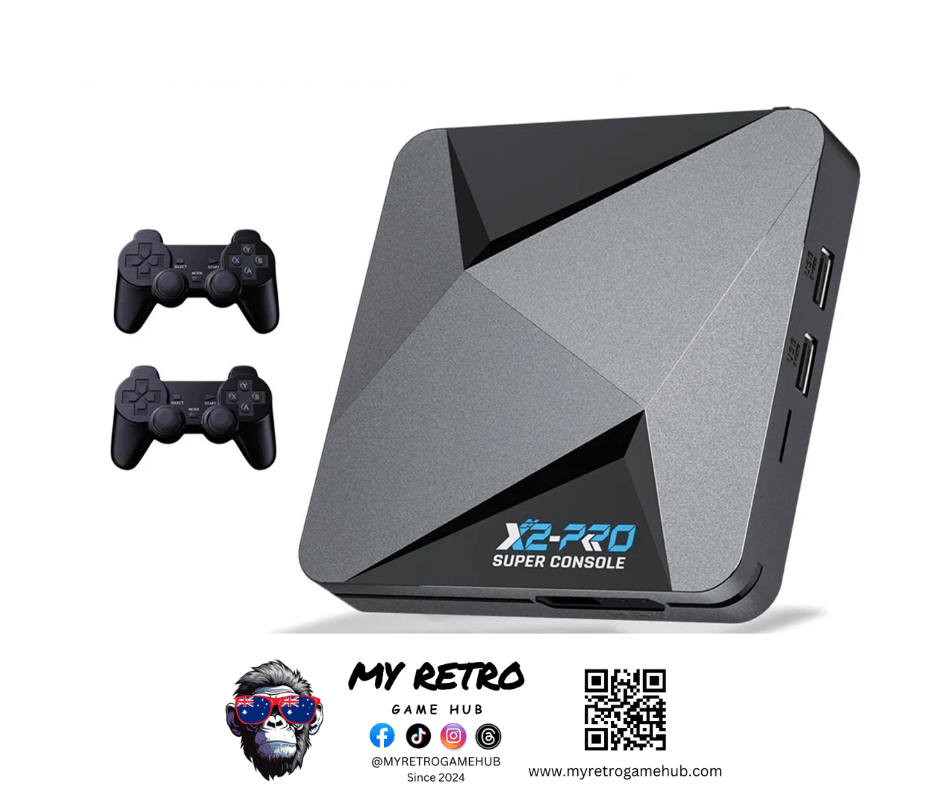
The Kinhank Super Console X2 Pro is what I use to get my retro fix or dive into a game for research. With over 90,000 pre-installed games across 60+ systems—like SNES, N64, and PlayStation—this plug-and-play hybrid console makes it easy to jump right into classic games.
It runs EmuELEC 4.6 and Android 9.0, so you can switch from gaming to streaming apps seamlessly. Plus, it supports 4K output, multiplayer, and dual-band Wi-Fi. Just hook it up, and you're good to go!
When I'm out and about, I carry my Trimui Smart Pro with me on the go, and let me tell you, I love this little guy. It's loaded with all my childhood games. And for those few missing titles, no worries—I just (legally) grab the ROM, load it onto the S.D. card, and boom, I'm back in action. Both the Kinhank and the Trimui is my go to for my nostalgic kick.

TriMui Smart Pro
Check out the TriMui Smart Pro—preloaded with over 12,000 retro games spanning multiple eras up to the PlayStation. This compact, portable device is your perfect companion for gaming on the go!
Special offer: Get a FREE carry case and screen protector with your purchase—while supplies last!
FREE DELIVERY WITHIN AUSTRALIA!
Let's Connect on Social!

-
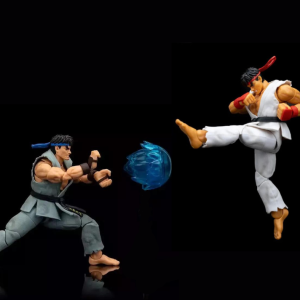
JADA Toys Street Fighter 2 – Ryu 6″ Action Figure
Price range: $48.00 through $58.00 -
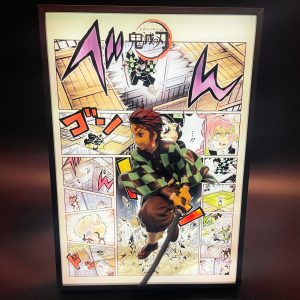
3D Light-Up Wall Art – Demon Slayer Tanjiro
$170.00 -
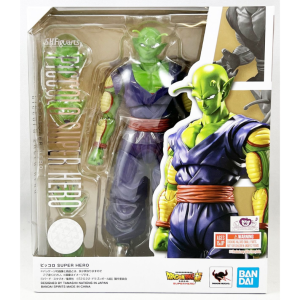
Bandai S.H.Figuarts Dragon Ball Super – Piccolo SUPER HERO
$79.00 -
3D Light-Up Wall Art – Dragon Ball Z – Goku vs Majin Buu
$200.00 -

JADA Toys Street Fighter 2 – Violent Ken 6″ Action Figure
$99.00
Some of the links on this site are affiliate links. If you click on one of the product links and then make a purchase, I may receive a small commission at no additional cost to you. Please know that I only recommend items I use and genuinely believe will benefit my readers. Your support through these affiliate partnerships helps me continue providing valuable content and keeping this site up and running. Thank you for your understanding and for being part of this community.