

If you read my previous blog - 1980 in Gaming: The Year of Pac-Man, you know how much of a game-changer that year was. Arcades exploded, Pac-Man fever took over the planet, and people started bringing the fun home with consoles like the Atari 2600 (1977), Magnavox Odyssey (1978) or the Intellivision (1979). But if 1980 laid the foundation, in 1981, the walls were built, and the difficulty was cranked up. This was the year gaming truly began to evolve, and new titles started setting records, challenging players, and pushing the limits of what games could do.
In 1981, everything felt bigger, louder, and faster—like the games. Fashion was still wild: shoulder pads, leg warmers, and oversized sunglasses dominated the streets. If you weren't out biking to the arcade, you were at home, glued to a Walkman, blasting Journey's "Don't Stop Believin'" or Phil Collins' "In the Air Tonight". Kim Carnes' "Bette Davis Eyes" topped the charts and became one of the year's biggest hits. Olivia Newton-John's "Physical" was everywhere, staying at the top of the Billboard Hot 100 for weeks.

1981 kicked off with the debut of the futuristic DeLorean DMC-12 in January. Though the car initially struggled to gain traction, it later became a symbol of nostalgia—much like the games from this era.
When it came to movies, there was no shortage of hits. Indiana Jones: Raiders of the Lost Ark gave us adventure like never before. At the same time, Escape from New York brought the gritty, sci-fi vibe that gamers couldn't get enough of. The Living Dead first appeared in the cult horror classic The Evil Dead, and two werewolf movies hit theatres that same year, The Howling and An American Werewolf in London. Meanwhile, Superman II continued the Man of Steel's cinematic journey, and the spy world got a dose of action with For Your Eyes Only, a James Bond instalment.

Over in Japan, the first Mobile Suit Gundam movie, Mobile Suit Gundam I, premiered in theatres in March, followed by the second film, Soldiers of Sorrow, released in July. Akira Toriyama's manga Dr. Slump (my favourite), which debuted in 1980, was adapted into an anime that aired on April 8, 1981.
Inflation and economic struggles lingered from 1980, but people still found ways to enjoy life. The Columbia Space Shuttle took flight in April, bringing hope and excitement to the space race. Meanwhile, over in the UK, Prince Charles and Lady Diana's royal wedding was the talk of the town.
The Gaming Scene Levels Up
By 1981, arcades were booming, and approximately 186 video games were released across various platforms, including arcades, home consoles, and early computers. If 1980 was when the gaming scene burst onto the stage, 1981 was when it levelled up in every way possible. More genres, better games, and bigger challenges—this year set the bar for what would follow.
The arcade battles were fierce, and home consoles were starting to get more attention. It was a golden time to be a gamer, whether grinding through mazes, flying spaceships, or platforming your way to victory. Home consoles like the Atari 2600 was still going strong, riding the momentum from previous years. Intellivision was making a strong mark in the gaming industry, positioning itself as a top competitor to Atari's 2600. The Nintendo's Game & Watch kept the handheld craze growing.
In March, the ZX81 home computer was launched worldwide and became an instant success. Then, in August, IBM introduced the IBM 5150 PC, which unknowingly kicked off a digital revolution.
A new wave of iconic games hit the market, some so memorable they're still discussed today. These games weren't just hits—they became genre-defining classics.
From the relentless platforming of Donkey Kong to the strategic dungeon crawling of Wizardry, every game brought something new to the table. It was also the Year Ms. Pac-Man arrived, giving Pac-Man's maze-chomping mechanics a fresh twist and keeping that fever alive. Meanwhile, Galaga and Frogger dominated arcades, proving that space shooters and quirky concepts had serious staying power.

The Games
Let's look at the 10 iconic 1981 games that pushed gaming forward. Each one made waves back then and continues to influence game design today.
Donkey Kong (Nintendo)
You can't talk about 1981 without mentioning Donkey Kong. It was developed by Nintendo and designed by the legendary Shigeru Miyamoto, who eventually created Super Mario Bros.
Donkey Kong wasn't just another arcade game—it was a revolution.
In the game, you play as Jumpman, a plucky carpenter on a mission to rescue a damsel in distress (later named Pauline) from the clutches of a giant gorilla, Donkey Kong. Players had to jump over barrels, dodge fireballs, and climb ladders to reach the top of the construction site, where Donkey Kong stood tauntingly with Pauline in his grasp. Its simple but challenging mechanics kept players returning, hungry for one more go.
The graphics were colourful and charming for the time, and the distinct level designs made each play-through feel fresh. Its multi-stage structure set it apart from other games of the era, and each screen offered new challenges—something few arcade games had done before. The catchy opening jingle became instantly iconic.
Donkey Kong was a defining moment for Nintendo, making them a major player in the industry. The game was quickly ported to platforms like the Atari 2600, ColecoVision, and even Nintendo's Game & Watch.
The game kickstarted Mario's career, who would later become the most recognisable character in video game history.
This title didn't just define 1981—it helped shape the future of gaming by introducing key mechanics, establishing Nintendo's dominance, and giving the world its first taste of Mario's adventures.
Galaga (Namco)
When it hit arcades in 1981, Galaga took the space shooter genre to new heights. Developed by Namco (and distributed by Midway in North America), it was the spiritual successor to Galaxian (1979). Still, it added deeper mechanics and more addictive gameplay.
The concept is simple: you control a starfighter at the bottom of the screen, blasting waves of alien enemies as they dive-bomb your ship in complex patterns. But Galaga added a clever twist—the enemy could capture your fighter using a tractor beam. If you managed to shoot down the enemy holding your ship, it would return to your control, giving you dual-firepower with two ships side by side. This mechanic became one of the most memorable features in arcade history.
Galaga featured colourful sprites, smooth animations, and exciting sound effects. Each level introduced new enemy behaviours, challenging players to adapt on the fly, making every playthrough feel different. And let's not forget the "Challenging Stages," which offered bonus rounds that gave players a break from the action while testing their precision shooting skills.
Galaga became a staple in arcades, standing shoulder to shoulder with hits like Pac-Man and Donkey Kong. Its tight controls, satisfying difficulty curve, and high-score competition kept players returning quarter after quarter. Even today, you can find Galaga cabinets in retro arcades and modern re-releases on consoles and handhelds.
Galaga's influence spread to home consoles like the NES, and it's been bundled into countless collections. Its addictive gameplay laid the groundwork for future shoot-'em-ups, and it still stands as one of the most beloved games of all time.
Frogger (Konami)
Frogger hopped onto the scene in 1981, developed by Konami and distributed in North America by Sega-Gremlin.
The game puts the player in control as a frog and is tasked to try to help him cross a busy road and a river full of hazards without getting squashed. As players quickly discovered, it's not as easy as it seems.
In Frogger's world, you'll have to dodge cars, jump across obstacles, and avoid water hazards. The game gets harder with each level, introducing faster-moving obstacles and more difficult patterns. It requires precise timing and quick reflexes.
Frogger wasn't just an arcade hit—it became a cultural icon. People of all ages were hooked, and it made its way into pop culture, even featuring in an episode of Seinfeld years later. Its success in arcades led to home console ports on systems like the Atari 2600, Intellivision, and Commodore 64, where it remained a fan favourite.
Frogger's legacy continues today, with modern remakes, mobile adaptations, and appearances in game collections. Its simple yet addictive gameplay and cute aesthetics have made it one of history's most recognisable and beloved games.
Defender (Williams Electronics)
Defender hit arcades in 1981 like a thunderbolt, bringing fast-paced action, challenging gameplay, and vibrant visuals. Developed by Williams Electronics, this side-scrolling shooter was one of the most technically advanced and challenging games of its time. Defender didn't just make players shoot down enemies—it made them think fast, master the controls, and keep multiple threats in check all at once.
In Defender, you pilot a spaceship tasked with defending humans from alien invaders who attempt to abduct them from the surface below. If an alien succeeded in carrying a human away, it would transform into a powerful mutant, making your mission even harder. The objective was to rescue the humans while eliminating waves of enemies, balancing both offence and defence—a rare challenge at the time.
This game was hard, and it didn't care if you knew it. The controls were complicated for an arcade game, featuring thrust, reverse, fire, and smart bombs, along with a mini-map at the top of the screen. Mastering Defender took time, and it was designed to keep players hooked while eating their quarters in the process.
Defender's colourful sprites and fast-moving action were visually impressive for 1981, and the game's sound effects—blaring alarms and explosions—created an intense atmosphere that drew crowds to arcades. It became an immediate hit, raking in millions of dollars in revenue and becoming one of the most successful arcade games of the era.
Defender's legacy is one of the greatest and most influential arcade games ever. Its fast-paced mechanics and emphasis on player skill inspired countless future games in the shooter genre, including space combat classics like Gradius and R-Type. It was ported to the Atari 2600 and later to platforms like the Game Boy, SNES, Mega Drive/Genesis, Dreamcast, and PS1. These later versions stayed closer to the original arcade experience, keeping the fast-paced challenge intact and continuing to test players' skills for years.
Ms. Pac-Man (Midway)
Ms. Pac-Man hit arcades in 1981 as an unexpected but wildly successful follow-up to Pac-Man (1980). Developed by General Computer Corporation (GCC) and released by Midway, Ms. Pac-Man wasn't just a cash-in sequel—it introduced new mechanics and improvements that made it arguably better than the original. The game quickly became a sensation, solidifying Pac-Man's place as a cultural icon and breaking gender stereotypes in gaming.
Ms. Pac-Man expanded on the original gameplay by featuring four rotating mazes and introducing randomised ghost movement, making each play-through unique and removing predictable patterns.
The gameplay was fast, smooth, and challenging. Ms. Pac-Man introduced new fruits as bonuses, such as bananas and pears, which moved through the maze instead of staying in place. The cutscenes between levels, showing Ms. Pac-Man and Pac-Man meeting, falling in love, and raising a baby Pac, added charm and personality—something new to video games at the time.
The visual upgrades didn't hurt either—Ms. Pac-Man's pink bow and bright colours gave the game a fun, approachable vibe that appealed to players of all ages and genders. The game's success was immediate and massive, even outselling the original Pac-Man in North America. Arcade-goers lined up to play, and Ms. Pac-Man became a familiar sight in arcades, pizzerias, laundromats, and shopping malls.
Ms. Pac-Man's influence extended far beyond 1981. It has been ported to almost every console and platform, from the Atari 2600 to the PlayStation. It remains a staple in retro game collections. More importantly, it was one of the first games to show that female characters could lead successful titles—a milestone in gaming history.
Wizardry: Proving Grounds of the Mad Overlord (Sir-Tech)
Wizardry: Proving Grounds of the Mad Overlord hit home computers in 1981 and was a groundbreaking step for the RPG genre. Developed by Andrew Greenberg and Robert Woodhead for the Apple II, it brought the complexity and depth of tabletop RPGs like Dungeons & Dragons into the digital space. This wasn't just a game—it was a challenge. Players had to create a party of adventurers, navigate through ten levels of a deadly dungeon, and face off against terrifying monsters along the way.
Wizardry was brutal and unforgiving. If your characters died, they were gone for good unless revived by the right spell or priest. Saving your progress wasn't automatic—players had to return to the game's castle to save their progress between dungeon runs, making each journey through the labyrinth a risky but rewarding experience.
What set Wizardry apart from other early RPGs was its first-person perspective, which made exploring the dungeon immersive. Players moved through the maze step by step, navigating hallways and hidden traps while engaging in turn-based combat with monsters like vampires, goblins, and dragons. Character stats, spells, and inventory management were key mechanics, making it one of the first deep RPGs with complex systems.
The game became a massive success on the Apple II and was later ported to platforms like the Commodore 64, NES, and PC-88. Wizardry's influence on the RPG genre is undeniable—it inspired future franchises like The Bard's Tale, Dragon Quest and Final Fantasy. Its first-person dungeon-crawling mechanics remain in modern RPGs, including games like Etrian Odyssey and Legend of Grimrock.
Despite its steep learning curve and punishing difficulty, Wizardry's deep mechanics and immersive gameplay captivated players. They set the template for many RPGs to come. It was the game that proved RPGs could thrive in a digital format—and that getting lost in a dungeon could be a lot of fun.
Astro Blaster (Sega/Gremlin)
Astro Blaster, developed by Sega/Gremlin, arrived in 1981 and stood out in the crowded arcade scene by combining classic space shooting action with unique mechanics like resource management and overheating weapons. It wasn't just another shoot-'em-up—it required precision and strategy to succeed, making it a favourite for players looking for something more challenging than the usual arcade fare.
In Astro Blaster, players control a spaceship and must shoot down waves of alien enemies, each with distinct movement patterns and behaviours. But what set the game apart was its overheating weapon system. Players couldn't simply spam the fire button—they had to fire carefully to avoid overheating their lasers. On top of that, the game also required fuel management—if you ran out of fuel before completing the level, it was game over.
Adding to the tension, voice synthesis technology provided alerts such as "Fuel is low" or "Laser temperature critical," creating a sense of urgency that kept players on edge. At the time, having voice effects in a game was cutting-edge and gave Astro Blaster a futuristic vibe.
Astro Blaster's bright, alien ships and fast-paced gameplay captured arcade-goers' attention. At the same time, the challenging levels kept players coming back. Despite not reaching the popularity of heavy hitters like Galaga or Defender, it found a niche with hardcore gamers who valued its focus on skill and resource management.
The game saw little success outside of the arcades, but its unique mechanics and innovative design inspired future space shooters to incorporate cooldowns and resource systems, concepts that are now common in many genres.
Venture (Exidy)
Venture hit arcades and home consoles in 1981, bringing an exciting blend of dungeon crawling and action-adventure gameplay. Developed by Exidy, this game put players in control of a brave little treasure hunter named Winky—armed with a bow and arrow—who had to explore a series of rooms within dangerous dungeons. Each room was filled with monsters, traps, and treasures, making every step challenging.
The gameplay was simple but engaging: Winky had to sneak into rooms, avoid or defeat enemies, grab treasure, and escape before the dungeon's guardians reappeared. The tension escalated with every second spent inside a room, as lingering too long would summon an invincible enemy that chased the player out. The mix of exploration and fast reflexes kept players glued to the screen, trying to find the perfect balance between greed and survival.
Venture's colourful rooms and unique monster designs stood out visually among other arcade titles. The game used a two-level perspective—players navigated the dungeon hallways on one screen, then zoomed into individual rooms to collect treasure. It wasn't just about high scores, it was about survival and careful exploration.
Venture also made its way to the ColecoVision, one of the best home console ports, where it became a fan favourite. Despite being overshadowed by bigger arcade titles like Donkey Kong and Defender, Venture carved out a spot in the hearts of retro gamers and dungeon-crawler enthusiasts.
While not as widely remembered today, Venture's influence can be seen in the design of later dungeon crawlers, especially those focused on loot collection and escape mechanics. It was one of the early games that gave players a taste of adventure and risk-reward gameplay, elements that continue to thrive in modern roguelikes.
Scramble (Konami)
Another game on this list developed by Konami, Scramble, became a landmark title in the shooter genre. Scramble's side-scrolling gameplay made it unique at the time, which was still a new concept for shooters. Instead of a single-screen battle, players had to guide their spaceship through six continuously scrolling levels, dodging obstacles and shooting enemies. Scramble was not just about blasting enemies—it also required fuel management, adding a layer of strategy to the fast-paced action.
The goal was to survive waves of enemy fire and environmental hazards while keeping an eye on the fuel gauge, which would steadily drain. Players could replenish fuel by shooting fuel depots scattered across the terrain. However, doing so was no easy task amidst incoming fire and tricky terrain layouts. The tight control mechanics and the thrill of dodging missiles and terrain at high speeds made Scramble an exhilarating experience.
Visually, Scramble's colourful alien landscapes and sharp sprite work were a big step up from previous shooters. It was challenging, fun, and addictive, with progressively harder levels that kept players coming back for more. The soundtrack of explosions, missile alarms, and fuel warnings added to the tension, keeping players on edge the whole time.
Scramble became a massive hit in arcades and inspired countless horizontal-scrolling shooters that followed, including Konami's own Gradius series. It was eventually ported to several home consoles, including the Atari 2600 and the VIC-20, though none of the ports quite captured the magic of the original arcade version.
Scramble's legacy is undeniable—the game laid the foundation for the side-scrolling shooter genre, which remains a favourite among retro and modern gamers alike.
Lock 'n' Chase (Data East)
Lock 'n' Chase brought a fun twist to the maze-chasing formula made famous by Pac-Man. Developed by Data East, it challenged players to steal treasure from a maze-like bank while evading pursuing police officers. Think of it as a cops-and-robbers version of Pac-Man, but with mechanics that give it its own personality and strategic flair.
The player controls a thief whose goal is to collect coins and bags of cash scattered throughout the maze. Instead of eating dots like in Pac-Man, the challenge lies in outmanoeuvring four police officers who try to corner you at every turn. What makes Lock' n' Chase unique is the ability to drop gates behind you, temporarily blocking the police and giving you time to grab more loot or escape tight situations. However, these gates vanish briefly, forcing players to keep moving and stay one step ahead of the law.
Lock 'n' Chase visually embraced simple, colourful graphics that made the action easy to follow. The game's charm came from its quirky, high-stakes concept—you're robbing a bank, after all—and its increasingly challenging levels made it hard to put down. Like Pac-Man, Lock' n' Chase was built around scoring points, encouraging players to take risks to collect more treasure before escaping the maze.
The game became popular enough to see ports on home consoles, including the Atari 2600 and Intellivision, where it found a second life with home gamers. While it never reached the iconic status of Pac-Man, Lock 'n' Chase carved out its own niche thanks to its clever mechanics and engaging gameplay.
Lock 'n' Chase's influence can be seen in later maze-based games emphasising strategy and resource management. It may not have become as big as its genre peers, but fans fondly remember it as a fun, strategic alternative in the maze-chasing craze of the early '80s.
Honourable Mentions
The first issue of Electronic Games magazine debuted in Winter 1981, marking it as the first dedicated video game publication in the U.S. Co-founded by Bill Kunkel, Arnie Katz, and Joyce Worley, it provided reviews, strategies, and industry news at a time when gaming was becoming a cultural phenomenon.
It wasn't just a guide for players—it set the standard for gaming lingo, coining terms like "Easter egg" and "screenshot." It was well-received and became influential, with its editorial tone setting the template for future gaming magazines.

And let's not forget some other honourable mentions from 1981 that helped shape the industry. 3D Monster Maze gave players a taste of first-person tension, laying the early groundwork for horror games. Ultima set the standard for open-world RPGs, while Castle Wolfenstein brought stealth mechanics to the forefront. Centipede took the shooter genre in a unique direction with its addictive gameplay. Utopia introduced some of the earliest concepts of simulation games.
These titles helped define what gaming has become, paved the way for entire genres, and continue to inspire game design today. This year built on the momentum of 1980 and took things to the next level, laying the groundwork for the golden age of arcade gaming.
Stay tuned for more as I dive into 1982, where the arcade craze only gets crazier and home consoles start making serious waves! 🎮
Stay Retro!
David - My Retro Game Hub
Read about The Birth of Nintendo or check out my other blogs - Click here.
How Do I Play My Retro Games?
You can play all these old-school games using the Kinhank Super Console X2 Pro emulator, I own one myself, and I love spending late nights getting lost in the massive library of retro games pre-installed on the device.
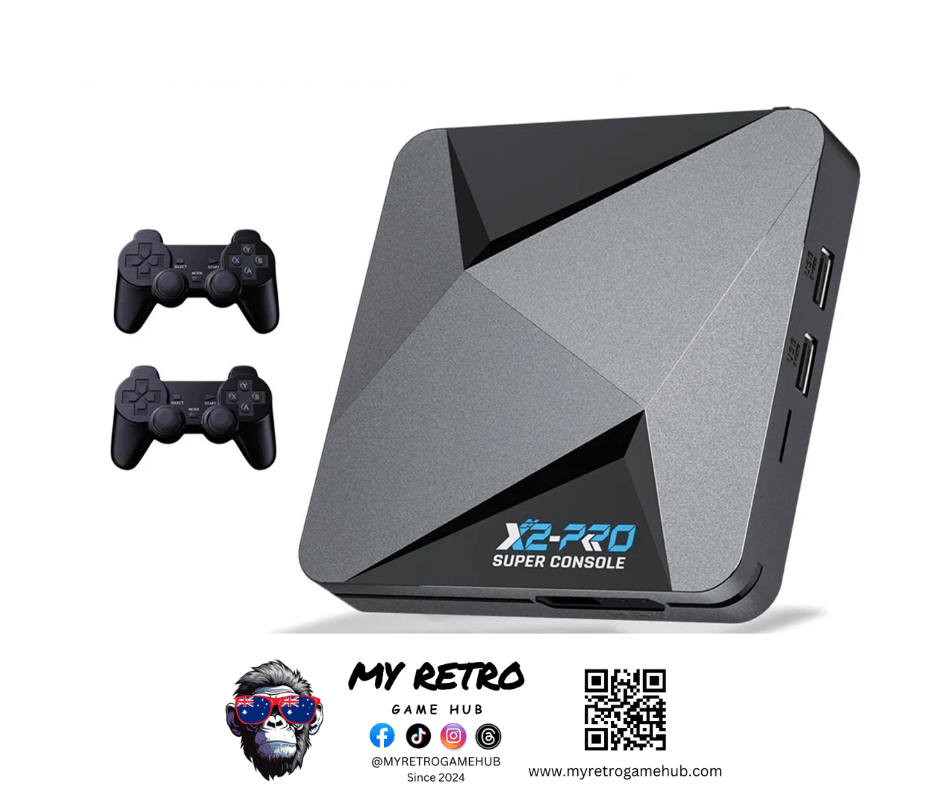
The Kinhank Super Console X2 Pro is what I use to get my retro fix or dive into a game for research. With over 90,000 pre-installed games across 60+ systems—like SNES, N64, and PlayStation—this plug-and-play hybrid console makes it easy to jump right into classic games.
It runs EmuELEC 4.6 and Android 9.0, so you can switch from gaming to streaming apps seamlessly. Plus, it supports 4K output, multiplayer, and dual-band Wi-Fi. Just hook it up, and you're good to go!
When I'm out and about, I carry my Trimui Smart Pro with me on the go, and let me tell you, I love this little guy. It's loaded with all my childhood games. And for those few missing titles, no worries—I just (legally) grab the ROM, load it onto the S.D. card, and boom, I'm back in action. Both the Kinhank and the Trimui is my go to for my nostalgic kick.

TriMui Smart Pro
Check out the TriMui Smart Pro—preloaded with over 12,000 retro games spanning multiple eras up to the PlayStation. This compact, portable device is your perfect companion for gaming on the go!
Special offer: Get a FREE carry case and screen protector with your purchase—while supplies last!
FREE DELIVERY WITHIN AUSTRALIA!
Let's Connect on Social!

-

BKM-129X with Raspberry Pi 4 Input Card for PVM/BVM
$349.95 -
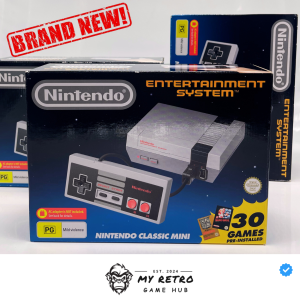
Nintendo Entertainment System – NES Mini Classic Edition
Price range: $170.00 through $220.00 -
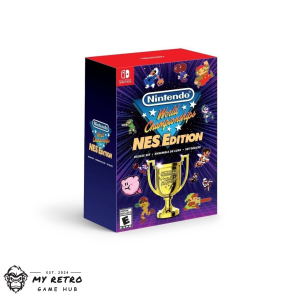
Nintendo Switch Championships NES Edition – Limited Edition
$140.00 -
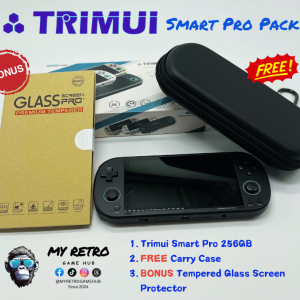
Trimui Smart Pro Ultimate Retro Gaming Pack – 256Gb Version
$170.00 -

BigBoysToys T.N.C-03 Street Fighter 2 – Chun Li
$279.95
Some of the links on this site are affiliate links. If you click on one of the product links and then make a purchase, I may receive a small commission at no additional cost to you. Please know that I only recommend items I use and genuinely believe will benefit my readers. Your support through these affiliate partnerships helps me continue providing valuable content and keeping this site up and running. Thank you for your understanding and for being part of this community.