

As we roll into the final month of 2024, life's getting hectic around the house. The Christmas tree is going up, decorations are being dusted off, and we're deep in the gift hunt for family and friends. We're gearing up for a Christmas family camping trip with a bunch of friends to Wilsons Promontory—just a 2.5-hour drive from home. It's the perfect mix of outdoor family adventures by day and for the kids gaming sessions at night in the tent (including myself). It's gonna be a blast!
So, continuing our "Years in Gaming" series of the '80s, we've landed in 1984. This was the year my little brain started firing up, and memories began to stick. I was 3 years old, probably babbling away and starting to make sense of the world around me.
We were still living in Hong Kong, and like most families back then, we had a maid who helped out with the house chores and, most importantly, kept an eye on me. I'll never forget her poster on the wall in her room: Rambo: First Blood (1982). I'd be lying on the bed and sucking on the bottle staring at this poster. That poster was pure 80s action gold, and even as a kid, it made an impression on me, though I had no clue what I was looking at the time.
That poster felt larger-than-life, kind of like how gaming felt back then. Those early memories of bold, pixelated graphics on old CRT screens had the same energy—raw, intense, and unforgettable. Maybe that Rambo poster was my first exposure to the over-the-top characters I'd later fall in love with in retro games, like Contra's muscle-bound heroes or Double Dragon's street-fighting bad-asses.
It's wild how pop culture and gaming shared that same vibe of pure, unfiltered excitement back then.

The Entertainment
1984 was a pivotal moment for the gaming industry and pop culture. It wasn't yet the recovery period after the crash, but it was a year of adjustment, experimentation, and groundwork for future success.
Transformers launched in 1984, and kids everywhere, including myself, were obsessed with these robots. He-Man and G.I. Joe figures were all over toy store shelves.
In Asia, anime was starting to build serious momentum. Shows like Urusei Yatsura continued to charm audiences, while Macross (known later as Robotech in the West) made waves with its mix of sci-fi and drama.
I was religiously watching Dr. Slump, Doraemon, and Ninja Hattori-kun, which is about a young ninja who befriends an elementary school boy.

1984 was loaded with blockbuster hits that kicked off some of the biggest film franchises ever. Ghostbusters, Gremlins, The Terminator, Beverly Hills Cop, Police Academy, The Karate Kid, and The Never Ending Story all made their debuts and left their mark that year.
Indiana Jones and the Temple of Doom took us on another wild adventure.
Horror lovers got their fill with Friday the 13th sequels and the terrifying debut of Freddy Krueger in A Nightmare on Elm Street.
I was too young to watch these films then, but I watched them all as I got a little older.

This was the year Alexey Pajitnov developed the very first version of a simple computer game on the Soviet Union's Electronika 60, inspired by a puzzle game called Pentominoes. The game ended up being named Tetris. You can play the original 1984 version here.
However, it wasn't until 1988 when it was discovered by Henk Rogers at the Consumer Electronics Show (CES) in Las Vegas, thus, securing its rights to release it for the Game Boy and helping cement its place in gaming history.
In 2023, a film titled Tetris was released. It chronicled the intense legal battles and Cold War intrigue surrounding the game's journey from Soviet Moscow to global stardom.
The Games
Amidst all this, 1984 was a year of transition and reinvention. It was a time when the gaming industry started picking up the pieces from the crash and building the foundation for what would become the modern gaming era.
Video games had to navigate a post-crash world. The North American video game crash in 1983 still cast a long shadow, but the industry wasn't down for the count. The Nintendo Famicom (which would later become the NES in North America) was going strong in Japan, proving that gaming had life left in it and setting the stage for its later global dominance. Meanwhile, the Atari 7800 was released, hoping to reclaim some of the magic that made its predecessor a household name.
The Commodore 64 was still king on the home computer front, with new games and software pushing its capabilities. The Apple Macintosh made its grand entrance, changing how people thought about personal computing with its graphical user interface. ZX Spectrum users were also treated to a steady flow of new games that kept their love for coding and gaming alive.
Let's have a look at some of the iconic games that were released in 1984.

Circus Charlie (Konami)
One of my favourites, Circus Charlie, first hit arcades in 1984 and was later ported to platforms like MSX and Famicom. When it was ported to the Famicom in '86, I played the shit out of this game.
Players take on the role of Charlie the Clown, performing daring stunts across six challenging levels, like jumping through flaming hoops, riding lions, and leaping onto trampolines. Each stage offers unique mechanics and increasing difficulty, keeping players hooked.
What made Circus Charlie special was its whimsical charm and variety. The bright visuals, catchy music, and fast-paced gameplay gave it a playful vibe that appealed to gamers of all ages. It wasn't just about reflexes; timing and strategy were key to mastering Charlie's circus acts.
Fun Fact: The trampoline-jumping mechanics in Circus Charlie influenced the design of future platforming games, proving that even a simple circus-themed title could leave a lasting impression on game design.
Elite (David Braben and Ian Bell)
Elite was launched on BBC Micro, an 8-bit home computer designed by Acorn Computers for the BBC Computer Literacy Project in the early 1980s. The game was later ported to numerous systems, including the Commodore 64, ZX Spectrum, and NES. This game set a new standard for space simulation and exploration with its open-world gameplay, procedural generation, and depth that was unheard of at the time. Players commanded a spaceship, traded goods, fought pirates, and navigated the vast expanse of space—all with wireframe 3D graphics that pushed the limits of home computing.
What made Elite memorable was its ambitious scale and freedom of choice. It wasn't just a game, it was an experience that put players in charge of their spacefaring destiny. It inspired future space sims like No Man'sMan's Sky and Star Citizen.
Fun Fact: Elite was one of the first games to use procedural generation, which allowed it to create over 8 galaxies with thousands of star systems, all fitting within the limited memory of the time.
Kung-Fu Master (Irem)
In 1984, everybody was Kung Fu fighting! Kung Fu Master first hit the arcades and was later ported to popular home consoles like the NES, Atari 2600, and Commodore 64. As one of the first side-scrolling beat 'em ups, this game set the stage for the genre's future. You play as Thomas, who had to fight through five levels of enemies to rescue Sylvia from Mr. X's clutches.
What made Kung-Fu Master iconic was its fast-paced action and unique level design, with different enemies coming at you from both directions, and a boss fight at the end of each level. Watch out for those huggers, they come at you from the front and the back!
Fun Fact: Kung-Fu Master was inspired by the Bruce Lee movie Game of Death and Jackie Chan's Wheels on Meals, giving it a cinematic edge that resonated with martial arts fans.
Boulder Dash (Peter Liepa and Chris Gray)
Boulder Dash was first released on the Atari 8-bit family of computers. It quickly became a hit, reaching systems like the Commodore 64, Apple II, and ZX Spectrum. This action-puzzle game had players guide Rockford through caves, collecting diamonds while dodging falling boulders and enemies.
What made Boulder Dash special was its mix of strategy and reflex-based gameplay. The challenge of figuring out how to grab gems without being crushed kept players glued to their screens, planning each move carefully. Its combination of puzzle-solving and action created a formula that was both addictive and satisfying.
Fun Fact: The original creator of the game, Peter Liepa, was not a professional developer when he started working on Boulder Dash. He was experimenting with computer graphics and physics, which led to the creation of this iconic game.
Excitebike (Nintendo)
Excitebike was released for the Famicom and later became one of the early hits on the NES. This motocross racing game stood out for its customizable tracks and fast-paced gameplay. Players could choose between racing against the clock or facing off against computer-controlled opponents, navigating obstacles like ramps and mud pits that tested their timing and strategy.
Excitebike's innovative design mode made it memorable. It allowed players to create their own tracks, a groundbreaking feature at the time. This added a layer of creativity and replayability that kept fans returning for more.
Fun Fact: The Japanese Famicom Disk System version of Excitebike (1988) let players save custom tracks using floppy disks. Sadly, this feature never made it to the NES, leaving players in other regions without the ability to save their creations.
1942 (Capcom)
1942 made its mark as a top-down vertical scrolling shooter that became a staple in arcades. The game was later ported to several home systems, including the NES, Commodore 64, and MSX. Set during World War II, players piloted a Lockheed P-38 Lightning, shooting down enemy planes and dodging fire to complete missions and rack up high scores.
What set 1942 apart was its simple yet engaging gameplay, with the unique ability to perform a ""loop-de-loop"" to evade attacks. The smooth controls and a catchy, repetitive soundtrack kept players pumping quarters into the arcade machines.
Fun Fact: 1942 was one of Capcom's first major arcade hits, setting the stage for their success with future classics like Street Fighter and Mega Man.
Jet Set Willy (Matthew Smith)
Jet Set Willy was released for the ZX Spectrum and quickly became popular among home computer gamers. It was a sequel to Manic Miner and continued the quirky, challenging gameplay that defined early British computer games. Players took on the role of Willy, a wealthy miner who had to tidy up his mansion after a wild party before he could go to bed.
What made Jet Set Willy iconic was its sprawling, non-linear gameplay and humorous, bizarre rooms filled with odd enemies and obstacles. The game required exploration and precise platforming, making it both frustratingly tricky and highly rewarding for those who mastered it.
Fun Fact: Some parts of Jet Set Willy were impossible to complete due to bugs in the original release. Fans and hobbyist programmers have since fixed these errors, creating playable versions long after its initial release.
Lode Runner (Douglas E. Smith)
Lode Runner was first released for the Apple II and later ported to systems like the Commodore 64, Atari 8-bit, and NES. This action-puzzle game puts players in control of a stick-figure hero tasked with collecting gold while avoiding guards. Players could dig holes to trap enemies or create pathways, adding a strategic twist to the fast-paced gameplay.
What made Lode Runner special was its built-in level editor, which allowed players to create and share their own levels—an innovative feature for the time. This encouraged a sense of community and endless replayability, setting it apart from other games of its era.
Fun Fact: The game’s creator, Douglas E. Smith, originally made Lode Runner to pay for his college tuition, but its success turned it into a global hit and a timeless classic.
Ballblazer (Lucasfilm Games)
Developed by Lucasfilm Games (later known as LucasArts), Ballblazer was released for the Atari 8-bit systems and later ported to platforms like the Commodore 64, Atari 5200, and other home computers. The game was a futuristic sports competition in which two players controlled hovercrafts called Rotofoils, competing to score goals in a fast-paced, split-screen arena.
Ballblazer's innovative use of split-screen multiplayer made it iconic. This created an intense, rare head-to-head experience. The fast gameplay, strategic movement, and adaptive AI hooked players, solo or with a friend.
Fun Fact: The game featured one of the earliest examples of algorithmic music generation, with its catchy, ever-changing soundtrack adapting in real-time to the gameplay.
Marble Madness (Atari Games)
Developed by Atari Games and designed by Mark Cerny, Marble Madness was released in arcades and later ported to various home systems, including the NES, Commodore 64, and Sega Genesis. Players controlled a marble navigating through an isometric maze filled with obstacles and enemies, racing against the clock to reach the end.
What made Marble Madness memorable was its unique, isometric graphics and physics-based gameplay, which required precision and quick reflexes. The game's use of a trackball controller in arcades added a tactile, engaging element ahead of its time. The innovative level design and surreal landscapes gave it a standout appeal that kept players returning for more.
Fun Fact: Marble Madness was one of the first video games to use stereo sound, enhancing the immersive experience with its quirky, otherworldly soundtrack.
Honourable Mentions
1984 was packed with unique games that deserve a nod for originality and influence.
Paperboy kept things chaotic and fun as you delivered newspapers while dodging dogs, cars, and lawnmowers.
Return of the Jedi, a sequel to the 1983 Star Wars arcade, brings the universe to life in a top-down shooter where you pilot iconic vehicles like speeder bikes and the Millennium Falcon through intense battles.
Bruce Lee blended action and platforming as you took on enemies while navigating tricky levels—a true martial arts adventure.
Punch-Out!! hit arcades with its addictive boxing gameplay and expressive characters. It was quickly followed by a sequel, Super Punch-Out!!. The series received its first home console entry in 1987, with Mike Tyson's Punch-Out!! for the Nintendo Entertainment System.
Karate Champ entered the ring as one of the first fighting games, introducing the concept of one-on-one martial arts battles and a scoring system based on precision and timing. Laying the foundation for the genre with its dual joystick controls.
Karateka took martial arts storytelling to the next level, combining cinematic visuals with side-scrolling combat, making it a standout.
And then there was Yie Ar Kung Fu. Man, this game had me rage-quitting like crazy! I could never beat the final fighter, Blues. Every time I was about to take him down, he'd spam attack and wipe me out—I swear, either it's a glitch, or the AI plays dirty.
Frustrations aside, Yie Ar Kung Fu deserves credit for refining the fighting game formula. It introduced a roster of opponents with unique fighting styles, keeping every match fresh and challenging. It's often called the pioneer of the fighting game genre. It laid the groundwork for the one-on-one fighters dominating arcades, eventually inspiring legends like Street Fighter (1987) and Street Fighter 2 (1991).
Wrapping Up 1984
1984 was a turning point in gaming, proving that even after a major crash, the industry could bounce back with bold ideas and innovation. From the strategic block-stacking of Tetris to the open-world exploration of Elite and the groundbreaking multiplayer in Ballblazer, developers showed that limitations could spark creativity. Games like Kung-Fu Master laid the groundwork for the beat 'em up genre, while titles like Marble Madness pushed graphical and gameplay boundaries.
Arcades were still alive and buzzing, while home consoles and computers kept gaming accessible and exciting. The Famicom was gearing up for its U.S. release as the Nintendo Entertainment System in the following year.
Commodore 64 and ZX Spectrum nurtured a generation of gamers and budding developers. Even in a post-crash world, 1984 reminded us that gaming wasn't just about surviving—it was evolving.
It was the year that laid the foundation for the golden age that would soon follow.
Stay Retro!
David - My Retro Game Hub
Read about The Birth of Nintendo or check out my other blogs - Click here.
How Do I Play My Retro Games?
You can play all these old-school games using the Kinhank Super Console X2 Pro emulator, I own one myself, and I love spending late nights getting lost in the massive library of retro games pre-installed on the device.
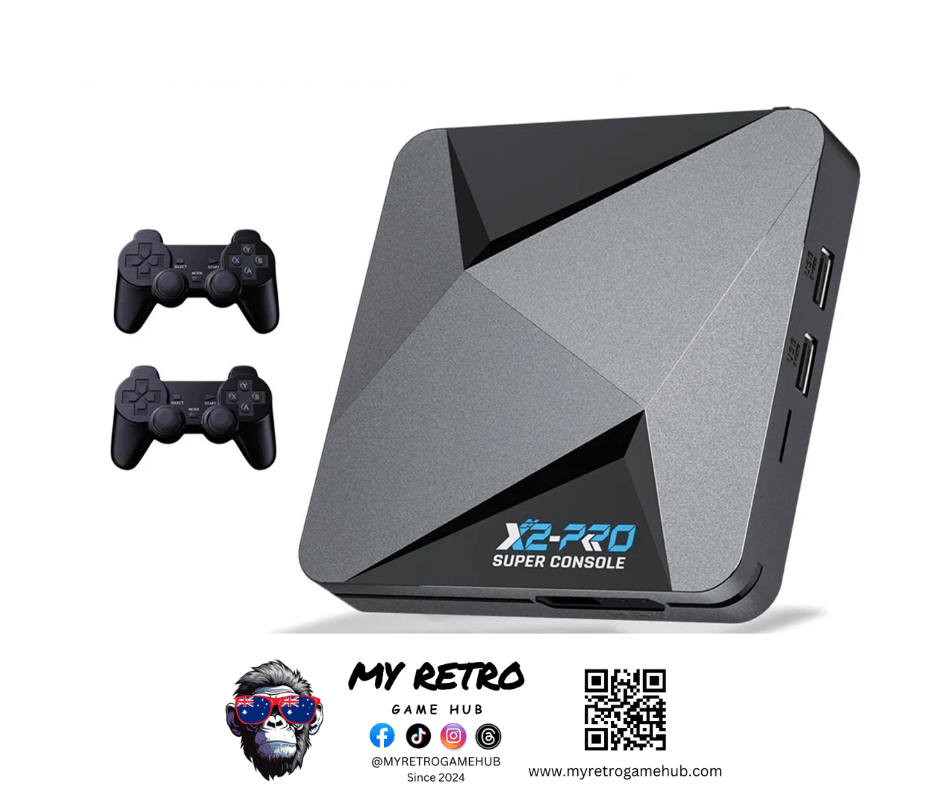
The Kinhank Super Console X2 Pro is what I use to get my retro fix or dive into a game for research. With over 90,000 pre-installed games across 60+ systems—like SNES, N64, and PlayStation—this plug-and-play hybrid console makes it easy to jump right into classic games.
It runs EmuELEC 4.6 and Android 9.0, so you can switch from gaming to streaming apps seamlessly. Plus, it supports 4K output, multiplayer, and dual-band Wi-Fi. Just hook it up, and you're good to go!
When I'm out, I always carry my Trimui Smart Pro with me on the go, and let me tell you, I love this little guy. It's loaded with all my childhood games. And for those few missing titles, no worries—I just (legally) grab the ROM, load it onto the S.D. card, and boom, I'm back in action. Both the Kinhank and the Trimui is my go to for my nostalgic kick.

TriMui Smart Pro
Check out the TriMui Smart Pro—preloaded with over 12,000 retro games spanning multiple eras up to the PlayStation. This compact, portable device is your perfect companion for gaming on the go!
Special offer: Get a FREE carry case and screen protector with your purchase—while supplies last!
FREE DELIVERY WITHIN AUSTRALIA!
Let's Connect on Social!

-

Bandai Figure-Rise Standard – Dragon Ball Z Legendary Super Saiyan Broly
$140.00 -

Bandai S.H.Figuarts – Dragon Ball Z – Awakened Super Saiyan Blood Vegetav
$75.00 -
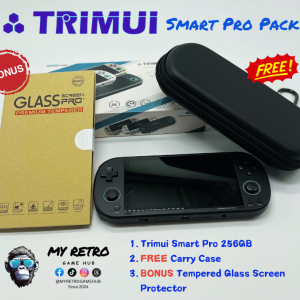
Trimui Smart Pro Ultimate Retro Gaming Pack – 256Gb Version
$170.00 -
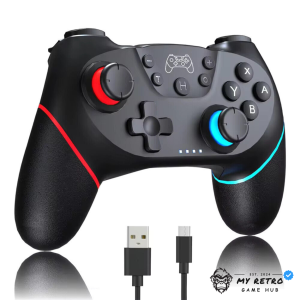
Wireless Controller N-SL – Compatible with the Nintendo Switch
$25.00 -
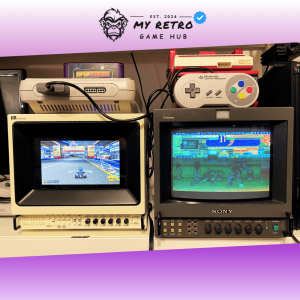
Retro PVM Switch Case
$280.00
Some of the links on this site are affiliate links. If you click on one of the product links and then make a purchase, I may receive a small commission at no additional cost to you. Please know that I only recommend items I use and genuinely believe will benefit my readers. Your support through these affiliate partnerships helps me continue providing valuable content and keeping this site up and running. Thank you for your understanding and for being part of this community.