
A Year of Shifts and Game-Changers
Following the momentum of 1981, 1982 kept the world buzzing with pop culture milestones, new tech, and economic changes. Fashion, movies, and music were pushing boundaries.
The fashion trends screamed bold and loud, with oversized blouses, leg warmers, neon colours, and Ray-Ban sunglasses dominating wardrobes. Films like E.T. the Extra-Terrestrial and Blade Runner lit up the box office. While Michael Jackson's "Thriller" and Joan Jett's "I Love Rock 'n' Roll" ruled the music charts, changing the landscape of pop culture forever. Meanwhile, the world saw major historical moments, including the Falklands War and the opening of Epcot Center in Disney World, giving people a glimpse of the future.

The Gaming Scene
In gaming, arcades were still the place to be, and home consoles were growing in popularity. The ZX Spectrum, developed by Sinclair Research, was released in the United Kingdom on April 23, 1982. This 8-bit home computer became highly influential in the early home computing and gaming market, particularly in Europe.
The ColecoVision hit the scene in August in the U.S., bringing more sophisticated graphics and gameplay to the home. The Commodore 64 also debuted in the same month, cementing itself as one of the most iconic computers for gamers and programmers. Atari was still the juggernaut, with the release of the Atari 5200 in November, an ambitious follow-up to the hugely successful Atari 2600. IBM's P.C. gained traction, setting the foundation for modern personal computers. It was an exciting time for the industry.
The Games
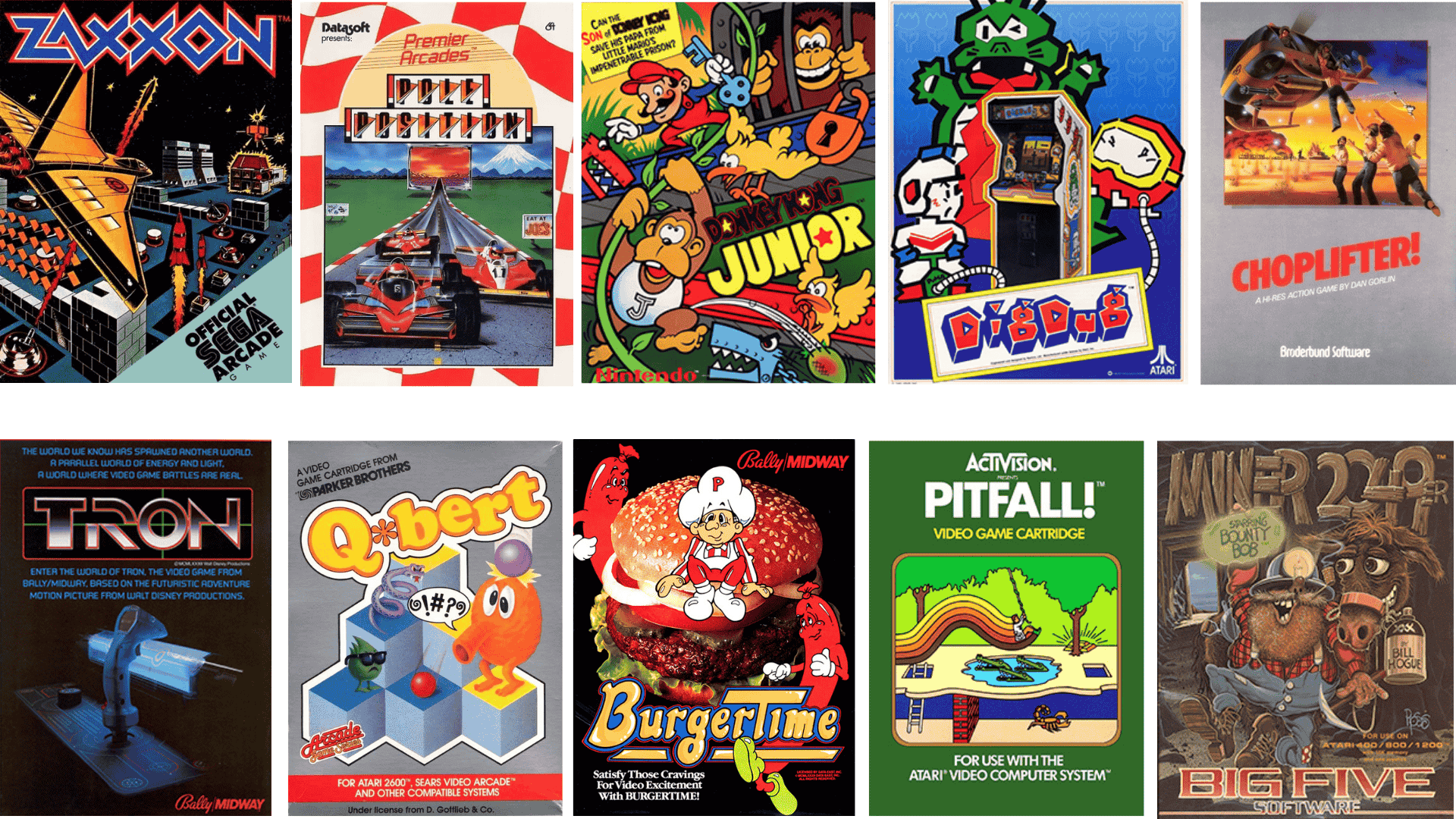
Let's explore 1982's most memorable games, the ones that started genres, became cultural icons, or simply became timeless classics. From Q*bert to Pitfall!, these games are why 1982 is a landmark year in gaming history. Now, let's take a closer look at the 10 most influential games of 1982 and see how they changed the game—literally. 😝
Zaxxon (Sega)
Zaxxon, developed by Sega, hit Japanese arcades in January and was released in the U.S. in March. It immediately stood out with its groundbreaking isometric 3D perspective. This new visual style gave players a sense of depth and altitude—something rarely seen then.
The gameplay required precision and strategy, as players needed to shoot enemies and manage their altitude carefully to avoid walls and obstacles. Players had to monitor their fuel levels and pick up fuel along the way, adding another layer of tension. Zaxxon was praised for its smooth animations and immersive design, which felt ahead of its time, making it a staple in arcades across the globe.
Zaxxon's unique mechanics had a lasting influence on the shooter genre, inspiring future games to experiment with new perspectives. The blend of strategy, action, and visuals made it a staple in arcades and one of Sega's standout titles of the era. Although it saw ports on home systems like the Atari 2600, ColecoVision, and even early P.C.s, these versions couldn't fully capture the experience of the arcade original.
Even today, Zaxxon remains a favourite among retro gaming enthusiasts. It's remembered today as a pioneer in gaming history, demonstrating how early developers could push the boundaries of graphics and gameplay.
Pole Position (Namco)
The release of Pole Position in February revolutionized racing games with its third-person perspective and realistic driving mechanics. Developed by Namco, it put players in control of a Formula 1 car, competing in time trials and races inspired by real tracks. Unlike earlier racers, Pole Position introduced elements like qualifying laps and laps against the clock, paving the way for future racing games.
Pole Position was a massive hit in arcades and became one of the highest-grossing games of its era. From the smooth steering to the adrenaline rush of overtaking rivals, it laid the foundation for future racing franchises like Gran Turismo, Forza, and Need for Speed. The combination of speed, precision, and competitive elements made it a staple in arcades and one of its era's most profitable arcade games.
It was later ported to platforms like the Atari 2600 and Commodore 64, bringing the arcade experience home.
Pole Position was one of the first games to feature in-game advertisements, with billboards for companies like Pepsi and Marlboro appearing along the race track.
Donkey Kong Jr. (Nintendo)
Released in arcades in April, Donkey Kong Jr. puts players in the role of Donkey Kong's son, tasked with rescuing his father from Mario. This game marks the only time Mario appears as the villain, making it a unique entry in Nintendo's history. The sequel adds fresh mechanics, like climbing dual vines and collecting keys, offering more complexity than the original Donkey Kong.
The game was praised for its engaging platforming challenges and dynamic level design, distinguishing it from other arcade titles of the time. It was later ported to platforms like the NES, Atari 2600, and ColecoVision.
The game was a commercial success, ranking as the eighth-highest-grossing arcade title in Japan that year. It was later ported to platforms like the NES, Atari 2600, and ColecoVision, cementing its place as a fan favourite. Donkey Kong Jr. appeared in later Nintendo games, including Super Mario Kart and Mario Tennis and remains a beloved entry in retro gaming history.
Dig Dug (Namco)
Dig Dug was a standout title in 1982, developed and released in April by Namco. What set Dig Dug apart from other arcade hits was its combination of action, puzzle, and strategy gameplay. The game gave players a unique underground adventure, where the goal was to dig through dirt, inflate enemies with an air pump, and blow them up or crush them with rocks. The quirky characters, like Pookas and Fygars, brought charm to the game, while the strategic digging added depth.
Dig Dug's reception was overwhelmingly positive. It became one of the biggest arcade successes of the early '80s, leading to ports on home consoles like the Atari 2600, ColecoVision, and the Nintendo Entertainment System (NES). The game's colourful graphics and catchy sound effects, especially the music that played only while you moved, became iconic in arcade halls.
Even decades later, Dig Dug remains a favourite among retro gamers, with sequels like Dig Dug II and appearances in Namco game compilations ensuring its legacy lives on. Its ability to turn such a simple premise into addictive fun showcases how 1982 was a golden year for innovative game design.
Choplifter (Dan Gorlin)
The game first appeared in May on the Apple II in 1982, and it was later released on platforms such as the Atari 5200, Commodore 64, MSX, and Sega Master System. Choplifter brought something fresh to gaming with its side-scrolling rescue missions. Players piloted a helicopter tasked with rescuing hostages from enemy territory and flying them to safety, all while dodging tanks, fighter jets, and anti-air fire. It was a delicate balance of offence and rescue—blasting through enemies while carefully landing to pick up survivors.
This blend of action and strategy made Choplifter an instant hit in arcades and home systems. It set the tone for rescue-based gameplay, influencing future titles and being one of the earliest examples of multi-objective gaming.
Dan Gorlin developed Choplifter in just six months. He was inspired by news coverage of hostages being rescued in the Middle East.
Choplifter spawned several sequels, including Choplifter II and Choplifter III, and an H.D. remake was released in 2012. Its success and influence have made it a notable part of gaming history, and it's still worth a play for retro enthusiasts today.
Tron (Bally Midway)
Tron, developed by Bally Midway and inspired by the Disney film of the same name, arrived in arcades in July and brought a unique blend of gameplay styles. The game featured four mini-games, including Light Cycles, I/O Tower, Tank Battles, and MCP Cone, each designed to replicate elements from the movie.
What made Tron special was its variety and fast-paced challenges, all packed into one machine. Players jumped between maze chases, vehicle combat, and shooting galleries. The bright neon visuals and immersive sound captured the essence of the movie, drawing players into its digital world. Tron became a fan favourite, remembered for its creative gameplay and showing that games based on film could be more than just cash-ins. It remains one of the most beloved arcade games from the early '80s, setting a high bar for future movie tie-ins.
While most movie-based games tend to flop, Tron broke the mould, proving that a well-crafted game could thrive in arcades. It sparked sequels, adaptations, and even a 2010 follow-up movie with its own game, cementing Tron as more than just a one-hit wonder. Its legacy lies in how it blurred the lines between film and gaming, paving the way for today's synergy between the two industries. The third instalment, Tron: Ares, is set for release in October 2025, likely accompanied by a new game.
Q*bert (Gottlieb)
Released in October, Q*bert brought a fresh, quirky vibe to arcades with its isometric puzzle-platformer gameplay. Q*bert is often considered one of the first characters to "swear" in video game history. With his signature exclamation "@!#?@!" whenever he got hit, Q*bert became one of the earliest gaming mascots, giving the game its own personality.
Players controlled the orange, snout-nosed Q*bert, hopping across a pyramid of cubes to change their colours—all while dodging bouncing enemies and avoiding a steep drop off the edges. Its unconventional controls (moving diagonally) made it challenging but addictive, and its surreal design gave it a unique charm.
Its vibrant visuals, unusual controls, and quirky character design made Q*bert an arcade favourite. The character's design and gameplay have remained iconic, leading to merchandise, cameos in movies like Wreck-It Ralph, and remakes over the years.
Q*bert became a cultural icon, spawning sequels, merchandise, and movie cameo appearances.
Its influence is still seen today in games experimenting with perspective and puzzle mechanics. Its popularity led to ports on platforms like the Atari 2600 and ColecoVision, ensuring it wasn't just an arcade hit and a home console success. I remember playing this one on my dad's IBM 386, the DOS version, in the mid-'80s; heaps of fun!
BurgerTime (Data East)
BurgerTime, developed by Data East, was launched in Japan in August and was distributed by Bally Midway in North America in November. It was later ported to several platforms, including the Atari 2600, Intellivision, NES, ColecoVision, and Commodore 64. The NES version became particularly popular, helping establish the game's status beyond the arcade scene and into home gaming culture.
BurgerTime had players step into the shoes of Peter Pepper, a chef tasked with assembling giant burgers while dodging angry food enemies—like Mr. Hot Dog and Mr. Pickle. The game required players to strategically navigate platforms, walk over burger ingredients to drop them into place and avoid being cornered by enemies. It's kind of weird stepping over the food you're supposed to serve your customers.
The burgers were stacked with each ingredient you completed until the level was cleared.
BurgerTime was an instant arcade hit thanks to its quirky concept and challenging gameplay. Its mix of puzzle and platforming mechanics kept players hooked, and it went on to influence later culinary-themed games and platformers. BurgerTime remains a beloved classic, proving that even a chef running from a hot dog can create a timeless gaming experience.
Pitfall! (Activision)
Released in September for the Atari 2600, Pitfall! was a groundbreaking game that introduced players to the side-scrolling adventure genre. Created by David Crane, the game tasked players with guiding Pitfall Harry through a jungle, jumping over pits, swinging on vines, and avoiding hazards like scorpions and rolling logs. With simple yet addictive gameplay, it challenged players to collect treasures within a 20-minute timer. David Crane reportedly coded Pitfall! in just 10 months, basing the idea on a single frame of Harry running, which he sketched during development.
Pitfall! didn't just entertain—it influenced future platformers like Super Mario Bros. and Sonic the Hedgehog, proving that action and exploration could be combined into a single experience. With over 4 million copies sold, it became one of the best-selling games for the Atari 2600. It cemented Crane's legacy as a pioneer of the gaming industry.
The game's success led to sequels, including Pitfall II: Lost Caverns and The Mayan Adventure in the 1990s. It remains an iconic title and is credited with helping define the platformer genre.
Miner 2049er (Big Five Software)
Developed by Big Five Software and released in December, Miner 2049er was initially launched on the Atari 400/800 computers. Due to its popularity was later ported to multiple platforms, including the Apple II, Atari 2600, Commodore 64, and ColecoVision. With 22 different versions released, it became one of its era's most widely ported games.
Miner 2049er put players in the boots of Bounty Bob, a miner navigating multiple levels filled with platforms, ladders, and hazards. The goal was to paint every part of the platforms by walking over them, all while avoiding radioactive creatures.
What made it stand out was its multi-screen levels—a first at the time—and clever mix of puzzle and platform elements.
The game's success on platforms like the Atari 2600 helped push the limits of home console capabilities and inspired future puzzle platformers. Challenging yet rewarding, it quickly became a classic.
Due to technical limitations, the Atari 2600 version had to be released as two separate cartridges since the full game couldn't fit on the console's standard ROM size. Miner 2049er remains a key piece of retro gaming history, influencing the development of future platformers with its intricate level design and multi-platform success.
Honourable Mentions
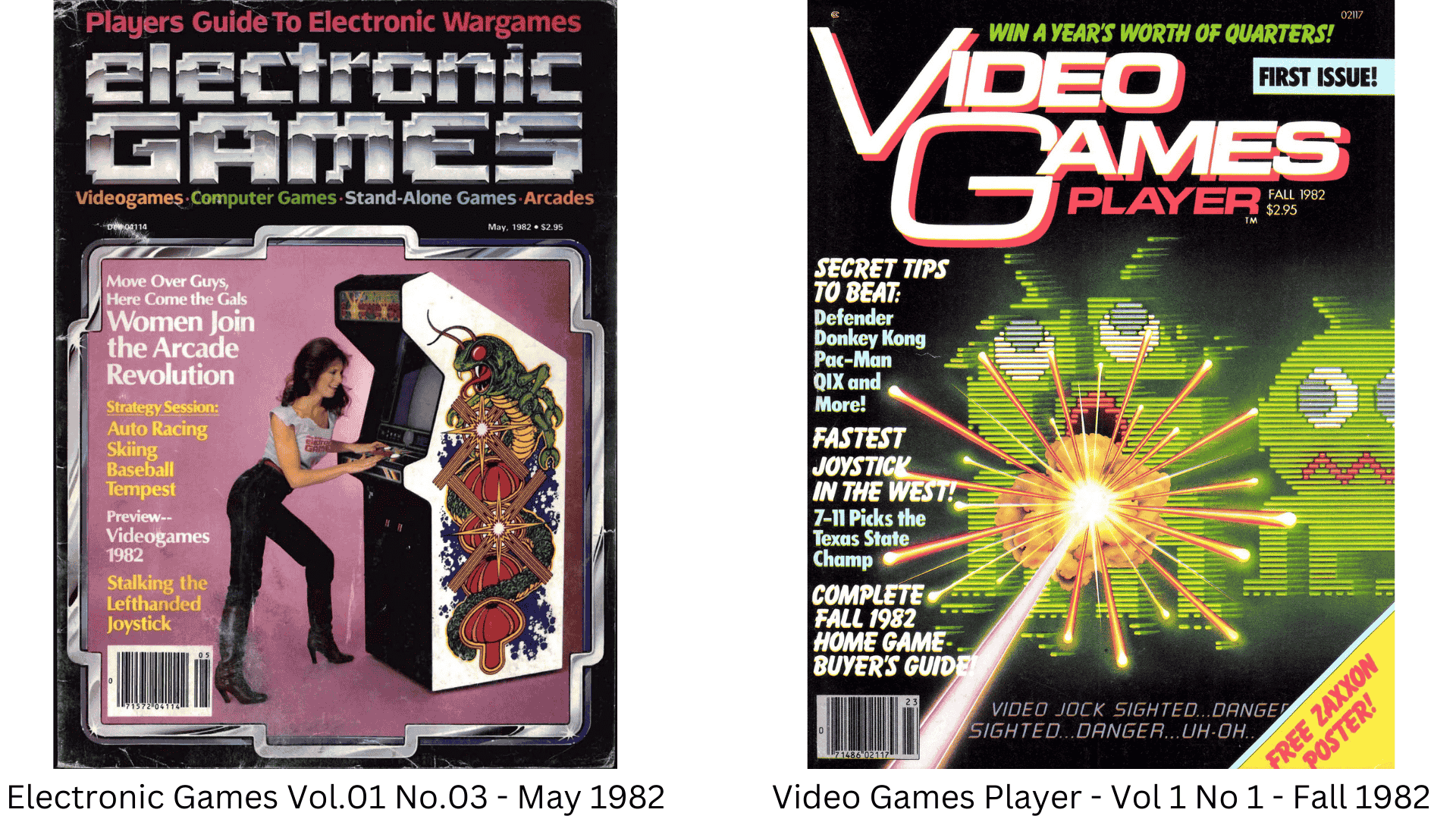
After Electronic Games magazine dropped in the fall of 1981, it continued into 1982. By May, it became the first dedicated monthly gaming mag in print. That year also saw other publications jump on the hype train, like Video Games Player, released towards the end of the year, riding the arcade and console boom. These early mags weren't just about filling pages—they shaped the gaming scene, giving readers reviews, tips, and all the latest industry buzz right when gaming was exploding into a full-blown cultural movement.
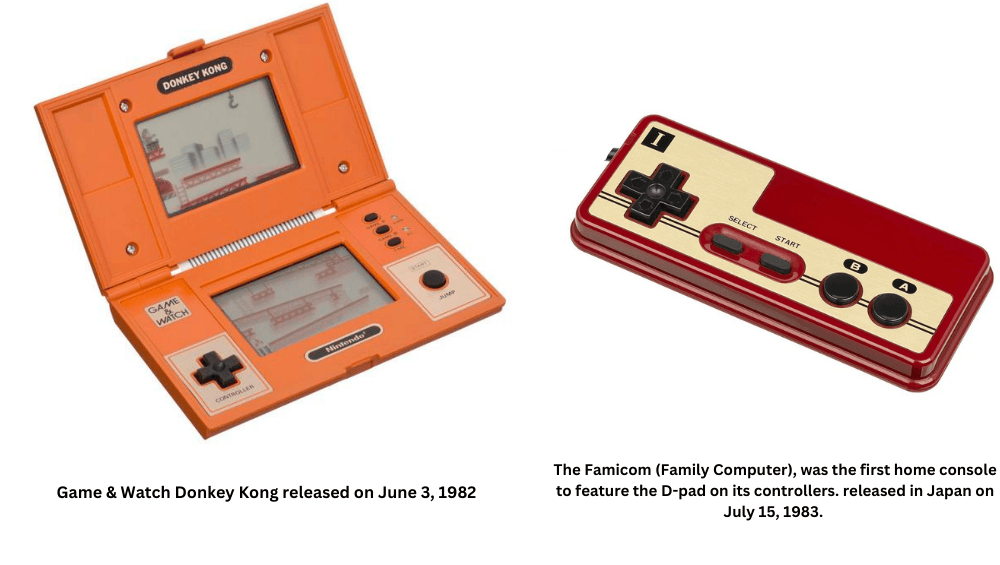
Nintendo introduced the D-pad (directional pad) in 1982. It was developed by Gunpei Yokoi for the Game & Watch version of Donkey Kong. The compact design allowed for precise movement, making it a breakthrough for portable and home consoles. This innovation later became a defining feature of the Nintendo Famicom controller, setting the standard for future video game controllers.
1982 saw several standout releases across different genres.
Popeye delivered fun platforming with licensed characters, while The Hobbit brought innovative A.I. to the world of text adventures.
Robotron: 2084 set a standard for twin-stick shooters with intense action, and Football Manager pioneered the management simulation genre. Microsoft Flight Simulator introduced unparalleled realism, cementing its place as a long-lasting simulator franchise.
Xevious captivated players with its vertical scrolling shooter mechanics and intricate gameplay. Jungle King (later renamed Jungle Hunt) combined action and exploration. Mr. Do! offered a unique mix of puzzle and arcade gameplay, earning praise for its originality.
These titles reflect the diversity and innovation that defined 1982's golden age of gaming.
Atari's Pac-Man (March 1982) and E.T. the Extra-Terrestrial (December 1982) were key contributors to the infamous 1983 video game crash. Pac-Man's rushed, low-quality port disappointed millions, leaving Atari with massive unsold stock. E.T., developed in just five weeks, was poorly received, with confusing gameplay and millions of unsold copies. The failure of these titles eroded consumer trust and led to market over saturation, triggering the industry's collapse.
The Legacy of 1982 in Gaming
Wrapping up 1982—a year filled with genre-defining titles and pioneering ideas that laid the foundation for the future of gaming. From the vine-swinging challenges of Pitfall! to the innovative isometric shooter Zaxxon, this lineup pushed creativity to new heights. Tron blurred the lines between movies and games, while BurgerTime turned a quirky concept into a cult classic. These games weren't just fun—they set the stage for what was to come, shaping genres and gameplay mechanics that are still relevant today.
Each title from 1982 was a step forward in gaming history, showing developers what was possible when creativity met emerging technology. Whether through rescue missions in Choplifter, high-speed racing in Pole Position, or the puzzle mechanics of Q*bert, these games carved out their place in the industry's evolution.
If 1981 gave us Donkey Kong's breakthrough, 1982 cranked things up—pushing games toward storytelling, diverse gameplay, and bold new designs, paving the way for future innovations and challenges. But this is just the beginning—stay tuned for our next blog on 1983, when Nintendo unleashed its console in Japan. This 8-bit beast didn't just join the game—it rewrote the rules and became a juggernaut in the industry, shaping the future of gaming. It's incredible how these early classics still influence what we play today.
Stay Retro!
David - My Retro Game Hub
Read about The Birth of Nintendo or check out my other blogs - Click here.
How Do I Play My Retro Games?
You can play all these old-school games using the Kinhank Super Console X2 Pro emulator, I own one myself, and I love spending late nights getting lost in the massive library of retro games pre-installed on the device.
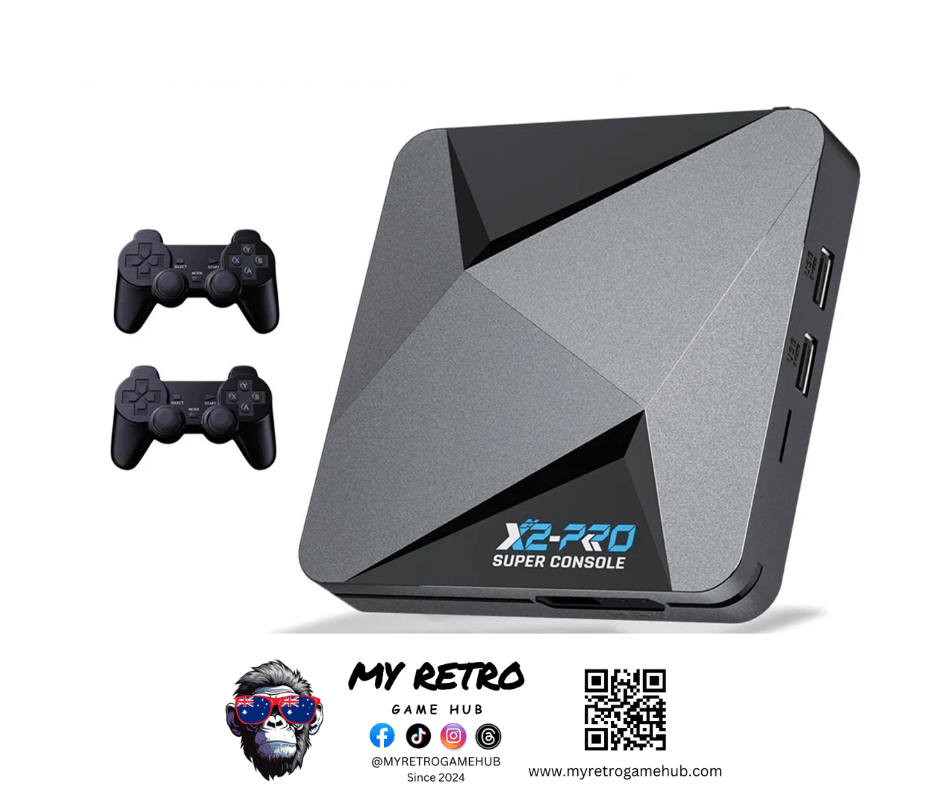
The Kinhank Super Console X2 Pro is what I use to get my retro fix or dive into a game for research. With over 90,000 pre-installed games across 60+ systems—like SNES, N64, and PlayStation—this plug-and-play hybrid console makes it easy to jump right into classic games.
It runs EmuELEC 4.6 and Android 9.0, so you can switch from gaming to streaming apps seamlessly. Plus, it supports 4K output, multiplayer, and dual-band Wi-Fi. Just hook it up, and you're good to go!
When I'm out and about, I carry my Trimui Smart Pro with me on the go, and let me tell you, I love this little guy. It's loaded with all my childhood games. And for those few missing titles, no worries—I just (legally) grab the ROM, load it onto the S.D. card, and boom, I'm back in action. Both the Kinhank and the Trimui is my go to for my nostalgic kick.

TriMui Smart Pro
Check out the TriMui Smart Pro—preloaded with over 12,000 retro games spanning multiple eras up to the PlayStation. This compact, portable device is your perfect companion for gaming on the go!
Special offer: Get a FREE carry case and screen protector with your purchase—while supplies last!
FREE DELIVERY WITHIN AUSTRALIA!
Let's Connect on Social!

Some of the links on this site are affiliate links. If you click on one of the product links and then make a purchase, I may receive a small commission at no additional cost to you. Please know that I only recommend items I use and genuinely believe will benefit my readers. Your support through these affiliate partnerships helps me continue providing valuable content and keeping this site up and running. Thank you for your understanding and for being part of this community.