
The Origins
The history of video games has evolved remarkably over the decades, from the simple yet engaging games of the 1970s to today's complex, immersive experiences.
This is an overview of the video game industry's evolution, tracing its journey from humble beginnings to its current status as a global cultural and economic powerhouse. Early innovations laid the groundwork for modern gaming, the rise of iconic consoles, and the development of groundbreaking games that redefined entertainment.
As early as the 1930s, amidst the Great Depression, a revolutionary form of entertainment emerged that would forever change the landscape of amusement and gaming: Baffle Ball. Created by David Gottlieb in 1931, Baffle Ball is the first successful countertop cabinet game. This pioneering invention provided a much-needed distraction during tough economic times and laid the groundwork for the modern pinball industry.
Just as bicycles paved the way for the invention of motor vehicles, Baffle Ball paved the way for video arcade games.
In 1931, David Gottlieb's Baffle Ball was the first successful countertop cabinet game. The game was simple but captivating. Baffle Ball did not have electricity, flippers, scoring devices or bumpers, and it had little resemblance to modern-day pinball.
Players use a plunger to launch a ball onto a plane inclined at a 7-degree angle, dotted with pins surrounding eight "scoring pockets." From there, gravity and luck take control as players hope for the ball to land in the higher-value pockets. For just one penny, players could launch seven balls.
Players would nudge the cabinet to guide the ball to its destination, a technique later known as 'tilting.' Sometimes, they would nudge the cabinet so forcefully that it was expected to move several inches from the starting position.
These cabinets were placed in public venues like bars, restaurants, and arcades. Players paid to play, generating consistent revenue and providing a financial blueprint for future arcade games.
Baffle Ball set the stage for what would eventually become the modern pinball machines, which laid the groundwork for arcade games and the multi-billion-dollar gaming industry we know today.

The Early Days
1947, Gottlieb released Humpty Dumpty, a significant game in pinball history. It is renowned for introducing a revolutionary feature that would become a staple in pinball machines: the flipper.
One of Gottlieb’s engineers, Harry Mabs, added six spring-powered levers that players used to propel the ball back into the playfield before it rolled out of play. Gottlieb called them 'flipper bumpers' and stated that to prove that Humpty Dumpty, his latest pinball cabinet, was not just a game of chance. Players scored most points by knocking the ball back into play with flippers rather than relying on luck and gravity.

Eddie Adlum, publisher, RePlay Magazine - The Ultimate History of Video Games Vol. 1 (New York: Three Rivers Press, 2001), p. 6.
The Flipper bat was quite a breakthrough because it gave the player a true means of exercising and developing skills. You could aim at targets now, rather than in the old days when you popped the ball up and just shook the shit out of the table and hoped that it went in the right hole or hit the right thing. The use of the flipper bat is probably the greatest breakthrough ever in pinball.
Most pinball machines built in 1947 had six flippers. In January 1948, a demonstration of the two-flipper design caused a lot of excitement at a trade show. The industry has used this basic design ever since.
The concept of video games started to develop in the 1950s. The technology was still in its infancy compared to what we would see later.
Some early experiments were happening at universities, where pioneering scientists laid the foundations for the emergence of digital games. At the Massachusetts Institute of Technology in the early 1950s, pioneering scientists conducted early experiments that laid the foundations for developing digital games. They created interactive computing applications on bulky, room-sized mainframe computers.
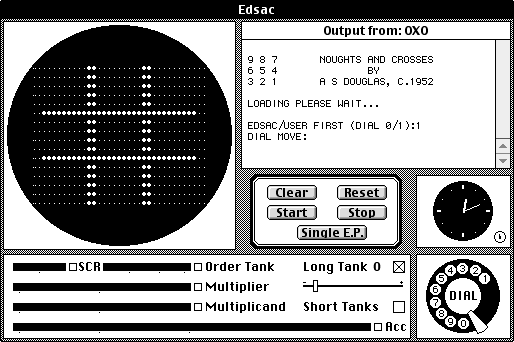
In 1952, a game called "OXO" or "Noughts and Crosses" was created, one of the earliest known games from that period. It enabled two players to engage in a simple wire-frame version of Tic-Tac-Toe using the EDSAC computer. This demonstration showcased the potential for interaction beyond mere calculations.

One of the earliest known interactive video games was "Tennis for Two," created by physicist William Higinbotham in 1958. This simple tennis simulation was displayed on an oscilloscope. Players could volley a ball back and forth using rotary dials as controllers.


Beyond these early experiments, commercial gaming has yet to exist as we know it. Home computers and consoles were still over a decade away from reaching the masses, and arcade culture had yet to be born.
The '40s and '50s served as an early incubation period. But the breakthrough technologies of the 1960s really birthed the foundations of this wonderful hobby we all enjoy today.
The First Generation
Computers in the 1940s were gigantic machines that filled entire rooms. They used vacuum tubes and punched cards for processing and data storage. Access was limited to government and research institutions due to their high cost and specialized skills required for operation.
In the 1950s, computers began to use transistors instead of vacuum tubes, making them somewhat smaller and more reliable, but they were still large and expensive.
Thanks to integrated circuits, computers became smaller and more powerful in the 1960s, making them more accessible to large businesses and universities. However, they were still expensive and needed specialized operators.
While the seeds were sown in the 1950s with XOX, the earliest forms of interactive electronic entertainment emerged during the 1960s.
In 1962, the first available video game was created. It was called "Spacewar!" and was developed by a group of MIT students- Martin Graetz, Steve Russell, and Wayne Wiitanen. This game was a significant milestone in the development of computer games.
Spacewar! was one of the first games to be played on a computer, specifically the PDP-1. Players controlled primitive spaceships and battled each other on the massive room-sized computers of the day. Word of the game spread quickly through the campus as it captured people's imaginations!
The game featured spaceships battling in a star-filled environment, laying the groundwork for future space-themed games.

Although Spacewar was enjoyable to play, it was never intended to be released to the general public because computers were still too expensive for personal use at the time.
Millions of American households owned televisions in the 1950s. By the 1960s, television had become a common fixture in homes across the United States. Still, these sets were solely used for viewing entertainment. Engineer Ralph Baer, often called the "Father of Video Games," believed this technology could also be used to play games.
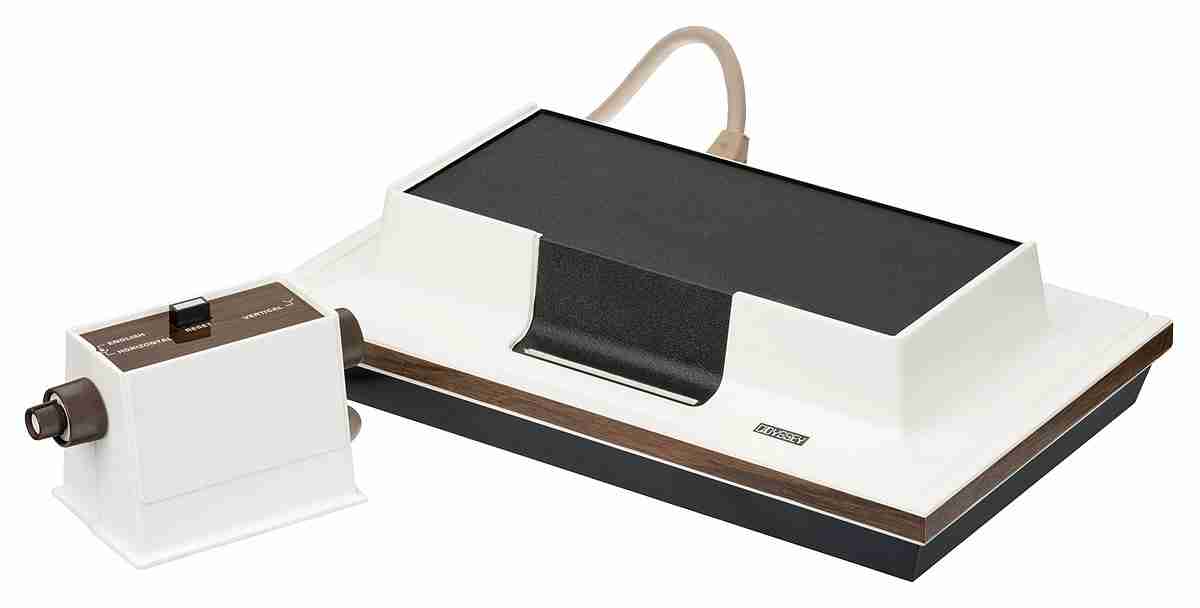
In 1966, while working for Sanders Associates, Inc., Baer explored this idea. He developed the Brown Box in 1967 with the assistance of Sanders technician Bob Tremblay. The first home game console prototype unit was created. This device was later released to the public as the Magnavox Odyssey in 1972, marking the start of the first generation of home video gaming consoles.
The Magnavox Odyssey was the world's first consumer device, allowing people to play interactive games on television.
With fewer than 200,000 units sold then, the Magnavox Odyssey was not a commercial success. Poor marketing played a significant role, as many potential buyers mistakenly believed that the Odyssey only worked with Magnavox televisions. Magnavox viewed the Odyssey as a gimmick to boost TV sales and didn't realize that video games could become an independent industry. As a result, the product didn't receive the necessary support.
Ralph Baer, "The Father of Video Games" (1922-2014) - The Ultimate History of Video Games Vol. 1 (New York: Three Rivers Press, 2001), p. 25.
Magnavox did a really lousy engineering job - they over-engineered the machine. Then they upped the price phenomenally so that the damn thing sold for $100. Here's the thing I wanted to sell for $19.95, coming out at $100. Then, in their advertising, they showed it hooked up to Magnavox TV sets and gave everyone the impression that this thing only worked on Magnavox TV sets.
The Odyssey was a primitive console with simple graphics and gameplay that required screen overlays. Despite its limitations, it laid the groundwork for the video game industry and inspired games like "Pong." The Magnavox Odyssey went on to sell over 330,000 units in its lifetime.
The Rise of Arcades
While the Odyssey was pioneering home gaming, the arcade scene was rapidly growing. The 1970s and 1980s are often known as the golden age of arcades.
During this time, a new figure emerged in the gaming world: Nolan Bushnell. A creative young entrepreneur, Bushnell had a background in amusement park arcades and a passion for innovation. He vividly remembered playing Spacewar! during his student years at the University of Utah and saw its potential beyond academia. With firsthand experience of the popularity of coin-operated machines, Bushnell envisioned transforming Spacewar into a commercially successful coin-operated arcade game. This vision would soon lead to groundbreaking developments in the video game industry.
In 1971, Nutting Associates released Nolan Bushnell’s "Computer Space." Because of its complex gameplay, which included pages of instructions explaining how to maneuver, steer, and jump into hyperspace, it was difficult for casual players. The Computer Space arcade cabinet features a sleek, futuristic design with a rounded fibreglass exterior, a vibrant, eye-catching colour, and a control panel with distinctive joystick and button controls. Nolan used the Dutch Goose, a bar off the Stanford University campus, as the test site. No one at the time had seen such a thing. Although it attracted a lot of stares, it didn't attract many players.
Nolan Bushnell - The Ultimate History of Video Games Vol. 1 (New York: Three Rivers Press, 2001), p. 34.
Computer Space pulled in huge amounts of quarters at the Dutch Goose. But it would earn almost no money in a workingman's bar. The Dutch Goose is really just a Stanford University hangout...

Despite this failure, Bushnell remained convinced of the potential of coin-operated video games.
In May 1972, after witnessing the table tennis game on the Magnavox Odyssey, Bushnell and Ted Dabney, an engineer at Ampex, founded a new company.
They initially named their company "Syzygy", which refers to an astronomical alignment of three celestial bodies. However, when they attempted to register the name, they discovered it had already been taken by a roofing company.
They ended up naming the company 'Atari' after the term "check" in the Japanese strategy board game 'GO', which literally means 'to hit a target'.
Nolan and Ted founded the company with an initial investment of $250 each. Within ten years, Atari would become a $2-billion-a-year entertainment giant, making it the fastest-growing US company.
Bushnell hired a young engineer named Allan Alcorn. He then gave Alcorn his first project as a training exercise at Atari: to create a simple ping-pong game. The game was supposed to be simple, with only one ball, two paddles, and a score—nothing else on the screen. This led to the development and release of Pong, an arcade ping-pong game.
In late September 1972, the first prototype was installed in Andy Capp’s Tavern in Sunnyvale, California. Alcorn remembers placing it alongside pinball machines, a jukebox, and a Computer Space machine. It quickly jammed due to an overflowing cashbox, signalling the game's significant success.
Alcorn remembers the bartender calling him two weeks after he installed the machine to suggest he come fix it, as it wasn't working.
Al Alcorn - The Ultimate History of Video Games Vol. 1 (New York: Three Rivers Press, 2001) p. 44.
He said to me, "Al, this is the weirdest thing. When I opened the bar this morning, there were two or three people at the door waiting to get in. They walked in and played that machine. They didn't buy anything. I've never seen anything like this before."
I went to fix the machine, not knowing what to expect. I opened the coin box to give myself a free game, and low and behold, this money gushed out. I grabbed handfuls of it, put them in my pockets, gave the manager my business card, and said, "Next time this happens, you call me at home right away. I can always fix this one."


The release of "Pong" sparked a massive surge in arcade gaming popularity, leading to the success of three of the most iconic arcade games in history: "Space Invaders" (1978) by a Japanese company called Taito, "Asteroids" (1979) by Atari, and "Pac-Man" (1980) by Namco published in America by Midway. These games were known for their simple controls, vibrant graphics, and captivating gameplay during that era.
Arcades became bustling social hotspots where people of all ages hung out and played games, making them first-generation gamers.
Eddie Adlum - RePlay Magazine - The Ultimate History of Video Games Vol.1 (New York Rivers Press, 2001) p.140.
Space Invaders was an outrageous hit, but it was nothing compared to the one that was to eventually become the icon of the video game business, and that was Pac-Man.
The Second Generation

Following the Magnavox Odyssey, several companies attempted to enter the home gaming market with varying degrees of success. These early consoles, such as Mattel's Intellivision, Commodore VIC-20, and ColecoVision, were generally limited in capabilities but helped keep the momentum going.
Early game consoles had a significant limitation—they could only play one game or a limited selection of games. However, during this period, the concept of programmable consoles that could play different games through interchangeable cartridges began to take shape.
In 1976, the Fairchild Channel F was introduced as the first programmable ROM cartridge-based video game console. This innovation allowed players to easily switch games, significantly expanding the potential for home gaming. The Channel F included a joystick controller and a modest library of games, setting a precedent for future consoles.
The launch of the Atari 2600 in 1977 marked a significant leap forward in home gaming. Unlike its predecessors, the Atari 2600 was built around a microprocessor. It used ROM cartridges to provide a wide variety of games.
This flexibility and a marketing strategy that included licensing popular arcade titles made the Atari 2600 a massive success.
With its iconic joystick and single-button controller, it became a household name in the early 1980s.
Atari's strategy involved securing the rights to popular arcade games and negotiating license deals with other companies. This ensured Atari had a robust library of recognizable and beloved games. They then ported the arcade classics to their home gaming console, which was a pivotal factor in the success of the Atari 2600. By leveraging the popularity of arcade games, Atari was able to attract a large audience and establish the home console market.
Although not all ports were perfect, the overall impact of this strategy was profound, helping to pave the way for the future of home video gaming. Its success helped establish video games as a mainstream form of entertainment and set the stage for future consoles.
One of the most notable games, Space Invaders, was ported to the home console two years after its arcade release in 1980. This port significantly boosted the console's sales and is often credited with establishing the commercial viability of home video game consoles.

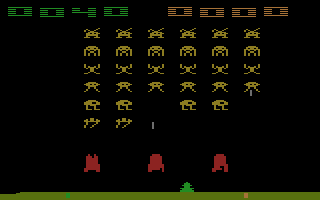
Atari's arcade game Asteroids was successfully ported to the Atari 2600 in 1981. The home version retained much of the gameplay that made the arcade version a hit, further cementing the Atari 2600's popularity among gamers.


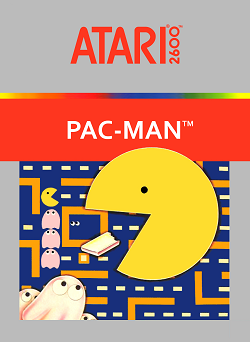
Another major arcade hit, Pac-Man, was also ported to the Atari 2600 two years after its release. Although the port was criticized for its poor quality compared to the arcade version, it still sold millions of copies due to the original game's popularity. This port demonstrated the strong demand for arcade games in the home market, even if the quality was compromised.

At its launch in 1977, the Atari 2600 retailed for USD 189.95. Adjusted for inflation in 2023, that amounts to approximately USD 1,257.
The best-selling game for the Atari 2600 was Pac-Man, despite its notorious poor reception due to significant differences from the arcade original. Atari sold approximately 8 million copies of Pac-Man for the Atari 2600, making it the console's best-selling game. Asteroids sold about 4 million copies, and Space Invaders sold approximately 2.5 million.

The 1983 Video Game Crash
The American gaming market was flooded with low-quality games and competing consoles, leading to consumer confusion and a negative public perception of video games.
Although Pac-Man was the best-selling game on the Atari 2600, its poor quality damaged Atari's reputation and eroded consumer trust. Players disappointed by the subpar experience became wary of future Atari releases, impacting the company's market position and contributing to its eventual decline.
In 1982, Atari was enjoying success with its popular console, the Atari 2600. Eager to capitalise on the booming video game market, the company sought high-profile licenses to boost game sales. Atari saw a golden opportunity when E.T. the Extra-Terrestrial, directed by Steven Spielberg, became a massive hit in theatres.
Steve Ross, then CEO of Time Warner, made a deal with Spielberg to produce the game E.T. as a cartridge for the Atari 2600. Ross told Spielberg that the game should be ready for Christmas 1982. The game was completed in just five weeks to meet the holiday deadline. It became another major flop. Its confusing gameplay alienated players, and millions of copies were returned or left unsold. These high-profile failures damaged consumer trust, and with retailers overwhelmed by inventory, the industry's collapse became inevitable.
E.T. became infamous in the video game industry for contributing to the 1983 crash, sparking rumours of unsold copies buried in a New Mexico landfill.
Ray Kassar, CEO of Atari (1978-1983) - The Ultimate History of Video Games Vol.1 (New York Rivers Press, 2001) p.238.
We had literally six weeks to produce a brand-new game, manufacture it, package it, and market it. It was a disaster. I mean, the programmers hated it. Nobody liked the game.
Then he (Ross) ordered us to produce almost five million of these games. I told him, "Steve, that's crazy. We never make five million of a product until we have some market testing."
He said, "Well, it's going to be a big hit because of Spielberg and E.T." So we made five million and practically all of them came back.

Burdened with an overstock of games and hardware, retailers significantly slashed prices to clear their inventory. These steep discounts triggered a vicious cycle; the remaining companies in the market couldn't compete or maintain profitability, forcing them to exit and offload their products at similarly low prices.
The aftermath was significant. It only took a few months for America's gaming industry to become a wasteland. Surviving third-party game publishers shifted their attention to creating computer games.
Companies like Mattel and Magnavox discontinued their consoles and shut down their video game divisions. Atari underwent several restructurings, and by the end of 1983, it had racked up $536 million in losses. The company was sold to new owners in the following year.
With the American industry leaders gone, the industry experienced a significant downturn. However, a new player from overseas entered the market and changed the game. Nintendo, from Japan, revitalised the market in the mid-1980s. The success of the Nintendo Entertainment System (NES) not only saved the gaming industry but also set new standards for video game quality and innovation, ushering in a new era of gaming.
Howard Scott Warshaw, a former game designer at Atari Corporation and creator of E.T. - The Ultimate History of Video Games Vol.1 (New York Rivers Press, 2001) p.219.
Spielberg wanted to make E.T. into a Pac-Man game, but I wanted to do something original. In retrospect... Maybe it wasn't such a bad idea.
Read our post where we explore the third generation of console gaming - The Aftermath of the Atari Shock.
Stay Retro!
David - My Retro Game Hub
Check out my other blogs - Click here.
Recommended Product

Retro Handheld - TriMui Smart Pro
Check out the TriMui Smart Pro—preloaded with over 12,000 retro games spanning multiple eras up to the PlayStation. This compact, portable device is your perfect companion for gaming on the go!
Special offer: Get a FREE carry case and screen protector with your purchase—while supplies last!
FREE DELIVERY WITHIN AUSTRALIA!
Let's Connect on Social!




Some of the links on this site are affiliate links. If you click on one of the product links and then make a purchase, I may receive a small commission at no additional cost to you. Please know that I only recommend items I use and/or genuinely believe will benefit my readers. Your support through these affiliate partnerships helps me continue providing valuable content and keeping this site up and running. Thank you for your understanding and for being part of this community.