
A Curious Chapter in Gaming History
When we think of Apple, our minds typically jump to iPhones, MacBooks, and perhaps Steve Jobs' iconic black turtleneck. But in the mid-90s, Apple dipped its toes into the gaming industry with a product that's largely forgotten today: the Apple Pippin. The story of the Pippin is fascinating, filled with ambition, innovation, and, ultimately, failure. So, let's dive into the timeline that led to the creation of this curious console, the people and companies involved, and why it ultimately couldn't find its place in the gaming world.
In 1985, Apple was in a precarious position. It was financially strained, losing market share to IBM and struggling with internal leadership conflicts. Despite its innovative design, the Macintosh was not the commercial success Apple had hoped for, leading to declining profits and growing uncertainty about the company's future.
The early 90s were not exactly smooth sailing for Apple. The company desperately tried to find its footing, exploring various markets beyond personal computers.
Enter the idea of a multimedia device—a hybrid between a game console and a personal computer. This era was when CD-ROM technology took off, and multimedia devices were seen as the next big thing. Apple's leadership at the time, including CEO Michael Spindler, was keen on capitalising on this trend.

Bandai and Apple - An Unlikely Partnership
The Apple-Bandai partnership for the Pippin project grew out of a mutual interest in entering the multimedia and home entertainment markets in the mid-1990s. Apple was eager to branch out beyond personal computers and saw the rising market as the next big opportunity.
Over in Japan, after the commercial failure of the Bandai Playdia console, released in 1994 and discontinued in 1996. Bandai teamed up with Apple to develop the Apple Bandai Pippin. This collaboration marked Bandai's continued interest in the gaming and multimedia market despite Playdia's shortcomings.
Apple envisioned the Pippin as a device that combined gaming, multimedia, and internet capabilities. Rather than diving into the gaming console market and shouldering all the risks, Apple chose to license the project to Bandai. Apple designed the Pippin's motherboard and developed the core hardware and software, including the processor and a custom version of Mac OS. On the other hand, Bandai handled the case production, assembled the final product, and took charge of marketing. They were responsible for manufacturing and distributing the console, particularly in Japan and the U.S. They managed the branding and sales strategy, positioning the Pippin as a multimedia entertainment device rather than just another gaming console. Bandai wanted to expand its reach into the hardware market and saw the Pippin as a perfect opportunity.

The project was dubbed 'Pippin,' sticking with the company's tradition of naming products after apple varieties. The aim was to build a low-cost computer platform that could double as a gaming console, multimedia player, and internet device. The project was led by Don Strickland, an Apple executive who believed that the future of computing lay in multimedia entertainment.
The Hardware: What Made the Pippin Tick?
The Pippin was built around Apple's PowerPC 603 processor, the same chip used in some of their Macintosh computers. It ran on a stripped-down version of the Macintosh operating system and used a CD-ROM drive to load games and multimedia content. The device also featured a built-in modem for internet connectivity—a pretty forward-thinking feature for its time.
The idea was to create a platform that could run games, educational software, and other multimedia content while offering some basic computing functions. However, due to cost constraints and the need to keep the device affordable, the Pippin's hardware was underpowered compared to its competitors, like the Sony PlayStation and Sega Saturn.
You might wonder, "Where was Steve Jobs in all of this?"
Well, the short answer is nowhere.
Steve Jobs had been ousted from the company in 1985 because of a clash with the CEO, and without his visionary leadership, Apple struggled with a series of missteps and declining market share.
Steve Jobs had left Apple by the time the Pippin was being developed, and he wasn't involved in the project at all. In fact, when Jobs returned to Apple in 1997, one of his first moves was to streamline the company's product line and to get rid of the Pippin. Jobs, known for his focus on simplicity and quality, likely saw the Pippin as a distraction from Apple's core mission.

The Launch and Reception
The Apple Pippin was officially released in 1996, with Bandai marketing it as the "Bandai Pippin @WORLD" in the U.S. and simply the "Bandai Pippin" in Japan. The console was priced at around $599—significantly more expensive than its competitors, which already put it at a disadvantage.
At launch, the Pippin came with a few bundled games and multimedia titles, including Gundam Tactics and Shockwave Assault.

Image courtesy of reddit user parknasty913
The Apple Bandai Pippin had a sleek, minimalist design that was very much in line with Apple's aesthetic. The console was fairly compact and featured a smooth, rounded casing in either a black or white finish, depending on the region. It had a simple, understated look with a front-loading CD-ROM drive that gave it a clean, uncluttered appearance.
The Pippin was highly versatile in its connectivity, offering VGA for monitors and composite outputs for TVs, along with a rare feature that allowed switching between NTSC and PAL video formats. It also supported power inputs from 100V to 240V and worked on both 50Hz and 60Hz frequencies, making it adaptable worldwide without needing a power converter.

The Pippin's controller had a unique, boomerang-like shape with a comfortable grip but an unconventional design. It featured a directional pad, action buttons, and a central trackball intended for menu navigation, which functions similarly to a computer mouse. The controller is connected via a proprietary port, with the option to use the infrared (IR) wireless function. This feature, carried over from Bandia's earlier Playdia console, allowed the controller to operate wirelessly. However, just like with the Playdia, the reliance on IR meant that the controller required a clear line of sight to the console, which could sometimes limit its practicality during gameplay. It also had additional ports for peripherals like a keyboard or modem, emphasizing the Pippin's hybrid nature between a computer and a gaming console.

However, the Pippin's game library was extremely limited, with only about 19 games released. This lack of software support was a major problem, especially compared to the hundreds of games available on the PlayStation and Saturn.
The reception was lukewarm, to say the least. Critics praised the Pippin's multimedia capabilities but were not impressed by its gaming performance. The high price, the limited game library, and the lack of third-party support made it a tough sell for consumers.
The Pippin's confused messaging as a multimedia device in a market primarily interested in gaming consoles, combined with Apple's lack of focus and identity during this period without Steve Jobs' vision, significantly undermined its appeal and contributed to its failure.

The Apple Bandai Pippin was not officially released in Europe, so it had virtually no impact in that market. While there were plans to bring the Pippin to Europe, they never materialised due to the console's poor performance in the United States and Japan. The limited success in those markets led to Bandai and Apple abandoning any broader international rollout, including in Europe.
As a result, the Pippin remains largely unknown in Europe, and any units found there are likely imported or very rare. The console's failure to gain traction in its initial markets prevented it from ever making a significant entry into the European gaming and multimedia market.
The Games
The games on the Pippin were a mixed bag, reflecting the system's attempt to be more than just a gaming console. With only around 18 to 25 titles released, depending on the region, the Pippin's game library was notably small—especially compared to the expansive libraries of the PlayStation or Nintendo 64.
Many of the Pippin's titles focused on educational or edutainment content, aligning with the device's broader goal of being a multimedia platform. You had games like "Gundam Tactics" and "Power Rangers Zeo vs. The Machine Empire," but also niche educational titles like "Zork: The Undiscovered Underground" and "Spelling Jungle." These games tried to blend learning with entertainment, limiting the Pippin's appeal in the competitive gaming market.

Image courtesy of reddit user parknasty913
Graphics and gameplay on the Pippin were generally simplistic and didn't match what PlayStation or Sega Saturn were offering at the time. Many of the games were ports or adaptations, and while some could be enjoyable, they didn't push the envelope in terms of what gaming could be. Plus, some titles leaned more towards internet browsing and multimedia experiences rather than traditional gaming, making them feel more like experiments than full-fledged games.
Since Pippin found more (relative) success in Japan, many games had a distinctly Japanese flavour, including titles based on popular anime or Japanese franchises. However, these didn't necessarily resonate with Western audiences. The Pippin needed an exclusive, must-have game to boost sales, but unfortunately, that never happened. While there were a few interesting titles, none were strong enough to define the system or attract a large audience.
Overall, the Pippin's game library was pretty underwhelming. The focus on educational content, simple gameplay, and multimedia didn't help in a market dominated by consoles with more advanced graphics and a wider selection of games. This limited game library and the need for a standout title played a big role in Pippin's commercial failure.
The End of the Road
The mid-90s were a fiercely competitive time in the gaming industry. Sony PlayStation, Sega Saturn, and even the Nintendo 64 dominated the market, vying for market share, and the Pippin simply couldn't stand out in such a crowded field.
Apple aimed to sell 500,000 Pippin units in the first year to break into the multimedia and home entertainment market, combining gaming, multimedia, and internet capabilities into one device.
However, it only sold an embarrassing 42,000 units worldwide during Pippin's lifespan, making it one of Apple's biggest commercial failures. The console was quietly discontinued by 1997, just a year after its release. When Steve Jobs returned to Apple, he immediately began trimming down the company's product line, and the Pippin was one of the first products to be axed. Jobs' return marked the end of Apple's brief foray into the gaming console market, and the company refocused on what it did best—computers and, eventually, mobile devices.
After the Bandai Playdia and Pippin's failed attempts in the gaming console market, with appalling sales in the U.S. and Japan, Bandai incurred heavy losses that almost crippled the company. Bandai returned to refocus on its core businesses, such as toys, video game publishing, and anime production. The company eventually merged with Namco in 2005 to form Bandai Namco Holdings, which became a major force in the entertainment industry, particularly in video games and multimedia content. Bandai's experience with the Pippin likely informed its decision to avoid further ventures into gaming hardware, instead concentrating on areas where it had proven expertise and success.
The Apple Pippin is now primarily a footnote in gaming history, a curious relic from when Apple was still trying to find its way. But for those who remember it, the Pippin is a testament to Apple's willingness to experiment, even if it didn't always hit the mark. Ultimately, it was a lesson learned that helped shape the future of Apple as we know it today.
Stay Retro!
David - My Retro Game Hub
Read about The Birth of Nintendo or check out my other blogs - Click here.
Recommended Product

Retro Handheld - Anbernic
Discover the Anbernic Handheld — preloaded with over 10,000 retro games from various eras up to the PlayStation, this compact and portable device is perfect for gaming on the go!
Special offer: Get a FREE carry case with your purchase—while supplies last!
FREE DELIVERY WITHIN AUSTRALIA!
Let's Connect on Social!

-
Sale!
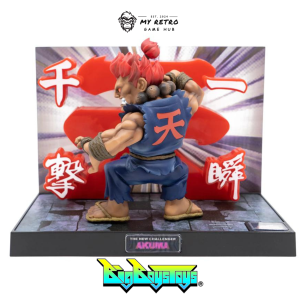
BigBoysToys T.N.C-00 Street Fighter 2 – Akuma/Gouki
Original price was: $550.00.$500.00Current price is: $500.00. -

3D Light-Up Wall Art – One Piece Zoro
$200.00 -

Bandai S.H.Figuarts Dragon Ball Super – Super Saiyan God Super Saiyan Son Goku
$84.00 -
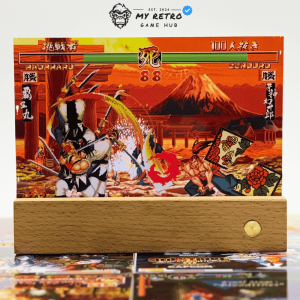
Acrylic Desktop Display – Samurai Shodown II
$44.95 -

LEGO 5002943 – Winter Soldier (2015)
$35.00
Some of the links on this site are affiliate links. If you click on one of the product links and then make a purchase, I may receive a small commission at no additional cost to you. Please know that I only recommend items I use and genuinely believe will benefit my readers. Your support through these affiliate partnerships helps me continue providing valuable content and keeping this site up and running. Thank you for your understanding and for being part of this community.