
Nintendo Famicom - Sweet Home
22nd May 2024 - By David Law (@myretrogamehub)

Home, Sweet Home
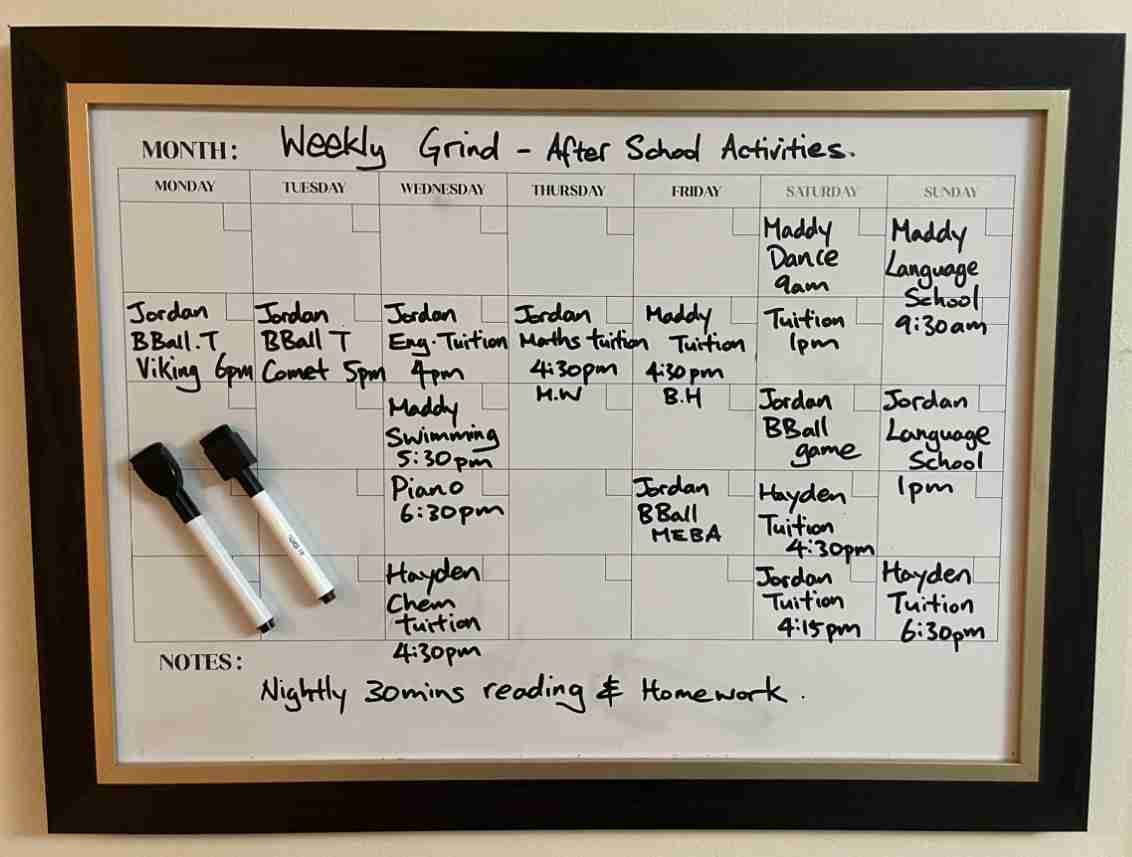
The past couple of weeks have been hectic with the kids since term 2 started. With packed extracurricular schedules—swimming, piano, basketball, and tuition—my wife and I have been busy coordinating the daily drop-offs and pick-ups.
Parenting often feels like a never-ending struggle from the moment you're awake until the kids are in bed. Weekends are just as busy. Saturdays with my daughter's early morning dance lessons and my son's basketball game, followed by more tuition and language classes on Sundays.
By the time I'm free, I'm often too exhausted and CBF doing anything else besides just sitting down in front of the TV to relax, watch a show or play some games.
Balancing family life and work has made it tough to squeeze in as much game time as I’d like. I’m trying to find ways to simplify my schedule and carve out more time to focus on creating and sharing more content consistently.
This leads me to a retro game I've recently played over the past two weeks. It's called 'Sweet Home' by Capcom and was released exclusively in Japan on Famicom in 1989.
My Review
I’ve always been a massive horror fan, whether it’s movies, books, anime, manga/comics, or games. My love for horror games began during my late adolescence with the original Resident Evil on the PlayStation in 1996, followed by Silent Hill in 1999. Since then, I’ve played every game in both series all the way up to 2024.
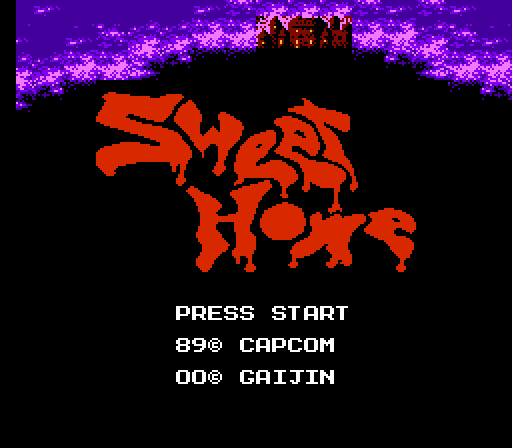
One day while driving to work, I wondered: What was the first horror game on the NES/Famicom?
That curiosity led me to uncover a hidden gem—an 8-bit horror game I had never heard of. Normally, RPGs aren’t my thing. If given the choice between RPG or an action game, I’d always go for the latter. I rarely go out of my way to seek out RPG games. But after doing some research, Sweet Home, piqued my interest.
Interestingly, Sweet Home is based on a 1989 Japanese horror film of the same name (The Mamiya House), directed by Kiyoshi Kurosawa. I've included a link to the movie at the end of this blog post for those interested. The film promotes the game by showing gameplay footage related to the movie before the main feature starts.
Both the game and the film were never released outside Japan. However, an English subtitled fan translation of the game became available in 2000. This was the version I played.
I learned that Sweet Home inspired the development of the first Resident Evil title on the original PlayStation. The two games share numerous similarities, including a storyline involving a team trapped in a haunted mansion filled with monsters and zombies, door-opening/loading scenes, puzzle-solving elements, and the primary objective of escaping the mansion.
Sweet Home was a unique and pioneering survival horror game for its time.

The iconic door loading scene from the original Resident Evil drew heavy inspiration from Sweet Home!
Now, let's briefly discuss the story and gameplay.
In my review, I'll share my personal experience playing the game. For those interested in exploring the game's backstory, development history, and connections to the Resident Evil franchise, I recommend checking out the relevant episode from the Movie Dumpster podcast below. The hosts provides an excellent analysis of Sweet Home's origins, a comparison to the Resident Evil series, and insights into the producers involved in both the game and its film adaptation.
However, It's a 90-minute listen, perfect for your commute or during your free time.
Story
Based on the 1989 film, the story revolves around five film crew members who visit the secluded mansion of the famous fresco painter Ichiro Mamiya. Rumour has it that before his mysterious disappearance 30 years ago, Mamiya hid several of his precious fresco paintings throughout the mansion. The filmmakers have come to the crumbling estate to document and preserve these lost works for a documentary.
As soon as the team enters the mansion, disaster strikes—the roof suddenly collapses behind them, blocking the exit. Then, the ghostly apparition of Lady Mamiya appears, ominously threatening the trespassers with death.
Now trapped inside the haunted house, the film crew must unite to explore the mansion's dark corridors and unravel its sinister secrets. Their only hope of escape lies in uncovering the truth behind Mamiya's disappearance and the mansion's bloody past. With the vengeful spirit of Lady Mamiya looming, the team must use all their wits and courage to find the lost frescoes and escape the mansion.
Gameplay
The game is a top-down, turn-based JRPG. It took me a bit of time to get used to navigating the in-game menu. Figuring out how to organize the team was a bit fiddly at first, but once I got the hang of the controls, everything fell into place. If you’ve played JRPGs before, the rest of the controls are pretty straightforward.
During the game, you can switch between controlling any character at any time. Each crew member has a unique special item to help overcome the game's challenges and puzzles. You can also rename all the characters at the beginning of the game.
I had some fun with this feature and renamed the five characters after everyone in my family. LOL! 😂🤣😅
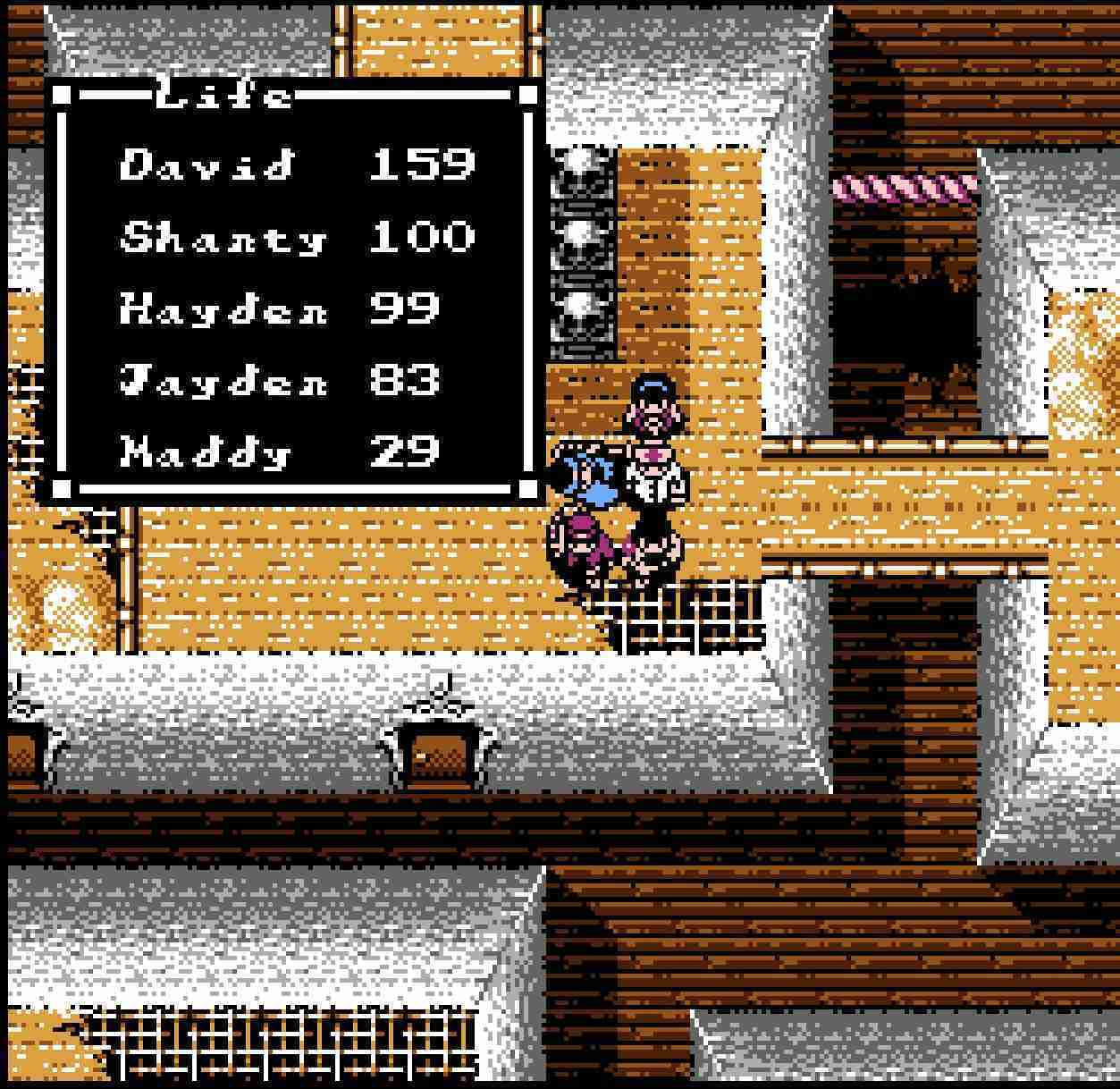
Scattered throughout the estate are various useful items and makeshift weapons that the crew can gather. Many items are required to solve puzzles or access new areas, but inventory space is limited. Each character only has room for one key item, one weapon, and two inventory slots. I frequently had to decide what to carry, which required me to remember where I left certain items in case I needed them later. The five key items are a lighter, a camera, a health kit, a key, and a vacuum, all of which are needed to solve puzzles and progress in the game.
The game forces you to carefully plan what you need to complete the many puzzles. I found myself backtracking across the mansion, returning for items I had dropped on the other side of the map, and swapping out different items as I went. I constantly encountered random enemies that would appear as I traveled, which could get repetitive and tedious at times, but it helped level up my characters.
However, character death in the game is permanent—there is no coming back from it. If a team member is killed, you lose that player for good, along with their two inventory slots. One of your surviving members must use one of their slots to carry the fallen comrade's key item.
On the bright side, you can save your progress at any time in the game. If you lose a character, you can reload a previous save and try again. I found myself frequently saving throughout my playthrough, and fortunately, I only had to reload once after losing a party member.
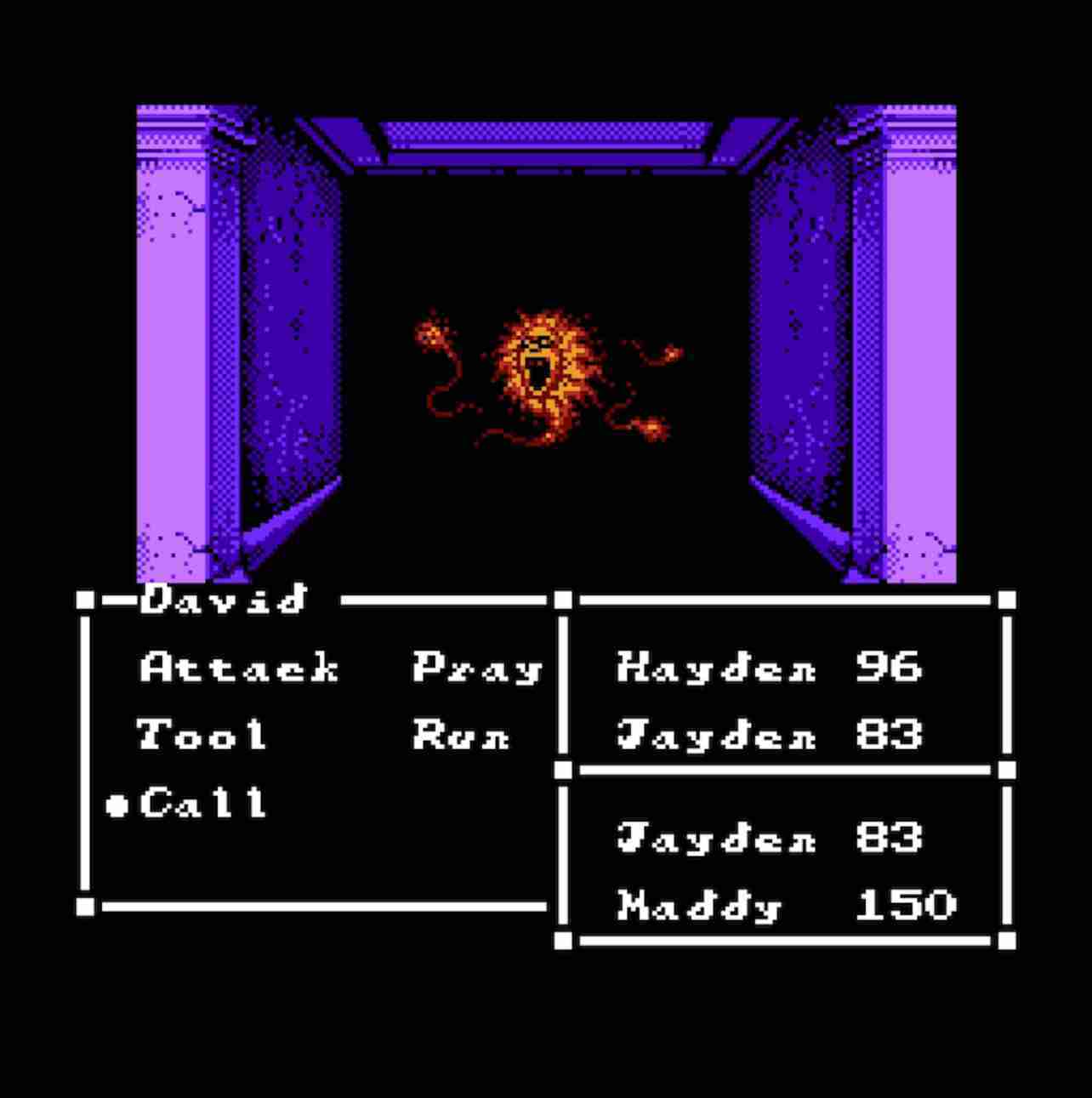
Combat in Sweet Home is basic and quick. You only battle one enemy at a time, with characters able to fight, run, use items, or pray (which acts as a magic system). The standout combat mechanic is the ability to call in reinforcements from elsewhere in the mansion. Selecting this option transitions you to the other characters, and you'll have a limited time to reach your team and join the ongoing battle. Having all five party members fight together allows you to defeat the monster faster and ensures everyone receives their share of experience points to level up.

As the team progresses, you will encounter notes and the bodies of previous victims. These can provide useful hints and clues to help navigate the mansion's dark secrets and avoid Lady Mamiya's vengeful spirit. Teamwork, resource management, and keen observation are crucial skills as you delve deeper into the house's disturbing history in a desperate attempt to survive.
For a late 1980s game, Sweet Home's crowning achievement is its compelling story. The tragic and twisted plot unfolds organically as players discover diary entries, victim corpses, hidden messages, and other clues around the mansion. This 8-bit horror title pioneered the survival horror genre's signature style of player-driven storytelling, which is now common in games today.
While the sprites and monster designs may not have the same visual impact as they did 35 years ago, especially compared to today's hyper-realistic, graphically violent games, it's important to consider the context in which the game was originally experienced.
Imagine playing this as an 8-year-old kid in 1989, when 8-bit graphics represented the cutting edge of video game technology. In that era, we weren't yet oversaturated with the lavish HD visuals we have today. Sweet Home's eerie atmosphere and unsettling creature designs would have been terrifying for players of that time. It was a true survival horror game ahead of its time.
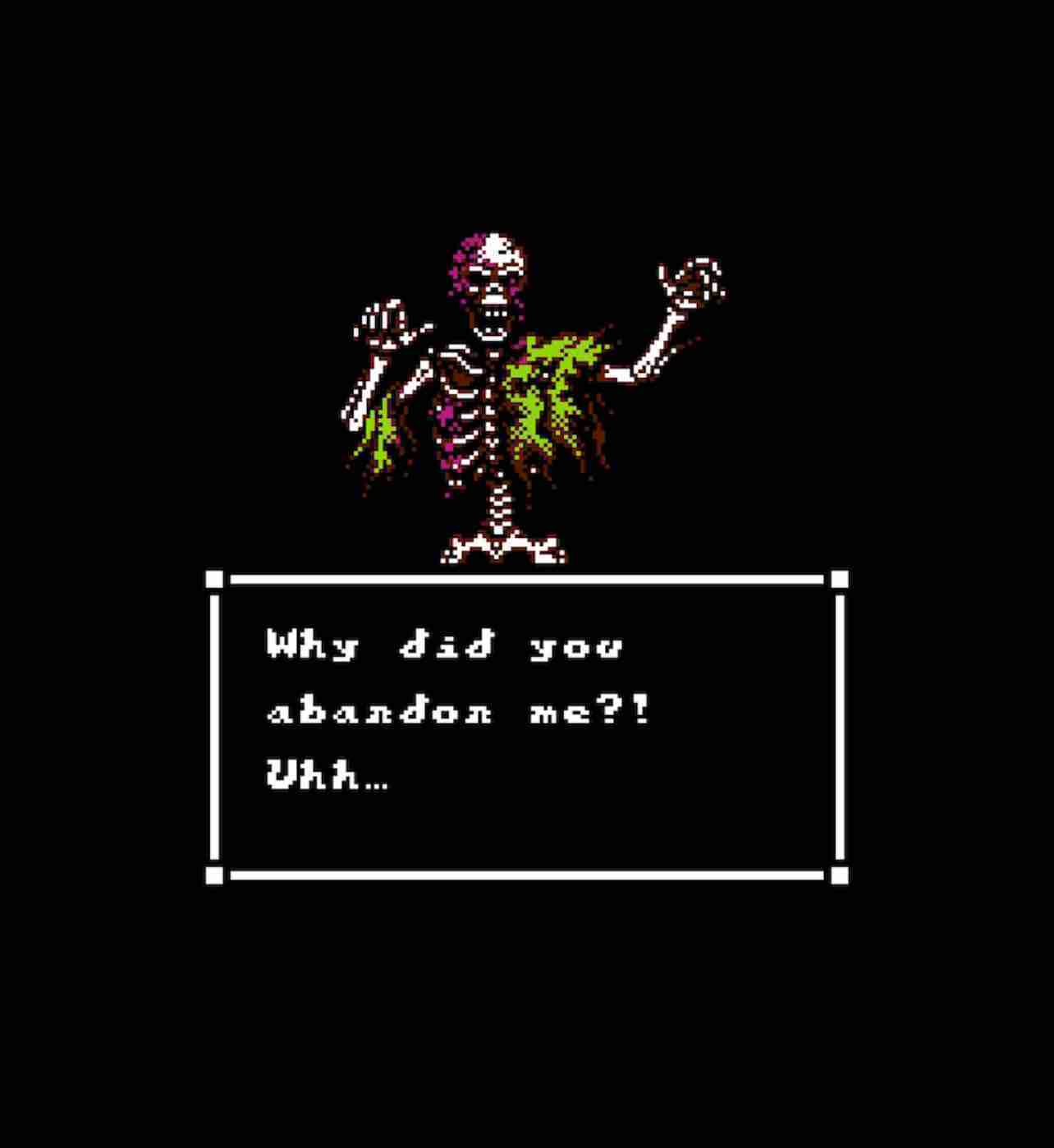
I still vividly remember playing Resident Evil on the PlayStation 1 for the first time. I thought the graphics were as realistic as they could get. The jump scares and the zombies' growls had me jumping off the couch, my heart racing, and constantly looking behind me in my room.
It's unfortunate that we never got to experience Sweet Home outside of Japan. Even if you managed to snag a Japanese cartridge to play on the Famicom back in the late 1980s, it would have been in Japanese because there were no English versions at the time.
I can only imagine the impact Sweet Home had on the Japanese kids who had the chance to play it at release and experience the game as it was originally intended during those days.
Due to its graphic content, this game was never ported and released in North America. Nintendo of America was known for maintaining a strict, family-friendly content policy on its NES. They would never allow a horror game with so much blood, gore, and disturbing designs of monsters, zombies, worms, and evil dolls on their system, deeming it too mature and inappropriate for Nintendo’s target audience. How much things have changed since then.
I recommend Sweet Home to fans of survival horror or Japanese RPGs—it's a hidden gem that many modern gamers are unaware of. Even if you don't intend to play through the entire game, it's worth checking out just to see the true origins of the survival horror. Despite being over 35 years old, the game still holds up surprisingly well and offers an interesting glimpse into the early evolution of the genre.
Sweet Home (1989) Japanese Horror Film
The 1989 Japanese horror film "Sweet Home" shares both similarities and key differences with the iconic Famicom game.
Like the game, the movie follows the story of a crew trapped in a cursed, haunted mansion, where strange occult occurrences and mutated monsters hinder their escape attempts.
For those interested, I've included the film below with English subtitles.
Getting your hands on an original copy of this game today could seriously dent your wallet, with eBay listings running into the hundreds of dollars depending on the game’s condition and whether it includes the box. Alternatively, you can officially emulate the game today—as I did using the recently released Delta Emulator on iOS
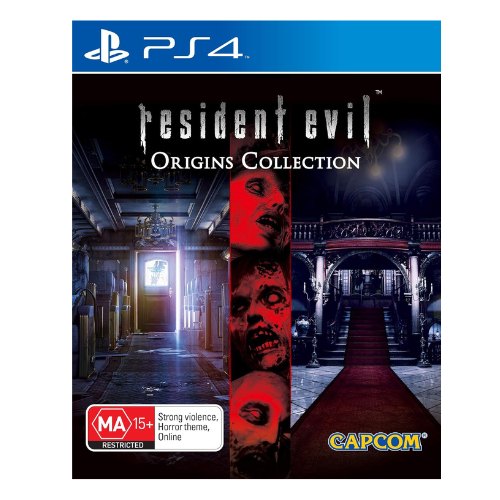
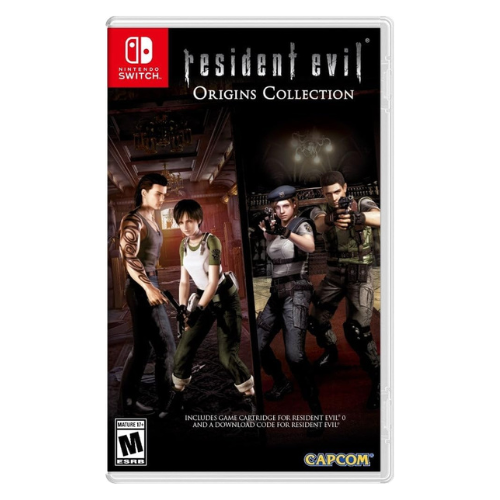
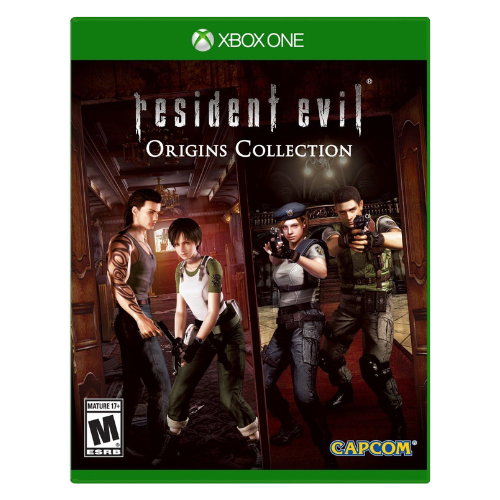
In 2016, this comprehensive Resident Evil collection was released for modern consoles, offering a hefty dose of nostalgia for longtime fans of the franchise. The original horror elements that made the series iconic remain as impactful today as they were in the past. However, some of the more dated gameplay mechanics may prove frustrating for newcomers. For devoted Resident Evil enthusiasts, this is undoubtedly the definitive compilation available.
To experience the original Resident Evil, you can play the remastered versions available on the PlayStation 4, Nintendo Switch, or Xbox One.
Stay Retro!
David - My Retro Game Hub
Read about The Birth of Video Game or the Birth of Nintendo
Recommended Product

Retro Handheld - TriMui Smart Pro
Check out the TriMui Smart Pro—preloaded with over 12,000 retro games spanning multiple eras up to the PlayStation. This compact, portable device is your perfect companion for gaming on the go!
Special offer: Get a FREE carry case and screen protector with your purchase—while supplies last!
FREE DELIVERY WITHIN AUSTRALIA!
"Some of the links on this site are affiliate links. If you click on one of the product links and then make a purchase, I may receive a small commission at no additional cost to you. Please know that I only recommend items I use and genuinely believe will benefit my readers. Your support through these affiliate partnerships helps me continue providing valuable content and keeping this site up and running. Thank you for your understanding and for being part of this community.”
Let's Connect on Social!





Some of the links on this site are affiliate links. If you click on one of the product links and then make a purchase, I may receive a small commission at no additional cost to you. Please know that I only recommend items I use and/or genuinely believe will benefit my readers. Your support through these affiliate partnerships helps me continue providing valuable content and keeping this site up and running. Thank you for your understanding and for being part of this community.